
Solana Bots: A Rapidly Evolving Space
Automated trading systems, or trading bots, are gaining traction in the Solana ecosystem. While building these tools once demanded significant programming skill, that barrier is now lower. Solana's high throughput and low transaction costs suit automated strategies needing rapid execution and frequent trades, spurring bot development and attracting traders of all levels.
Opportunity drives this trend. Solana's decentralized exchanges (DEXs), less mature than Ethereum's, offer inefficiencies like arbitrage possibilities that bots can exploit. The Colosseum Frontier Hackathon (April 6th – May 11th, 2026) will likely accelerate development, bringing new talent and ideas to Solana.
Solana trading bots are not a guaranteed path to profit. They carry risks like technical malfunctions, smart contract vulnerabilities, and potential financial losses. Entering this space requires careful research, diligent risk management, and a realistic understanding of the challenges. Solana's speed demands careful monitoring, even with automation.
Decoding Bot Strategies: What’s Happening Under the Hood?
Solana trading bots use various strategies to capitalize on market movements. Arbitrage bots find price discrepancies for the same asset across different exchanges, buying low on one and selling high on another. Market making bots provide liquidity by placing buy and sell orders, profiting from the spread.
Other strategies include trend following, where bots identify and profit from established price trends, and grid trading, which places buy and sell orders at predetermined price levels to profit from price fluctuations within a defined range. Bitget's 2026 guide to Solana trading bots lists these as core strategies.
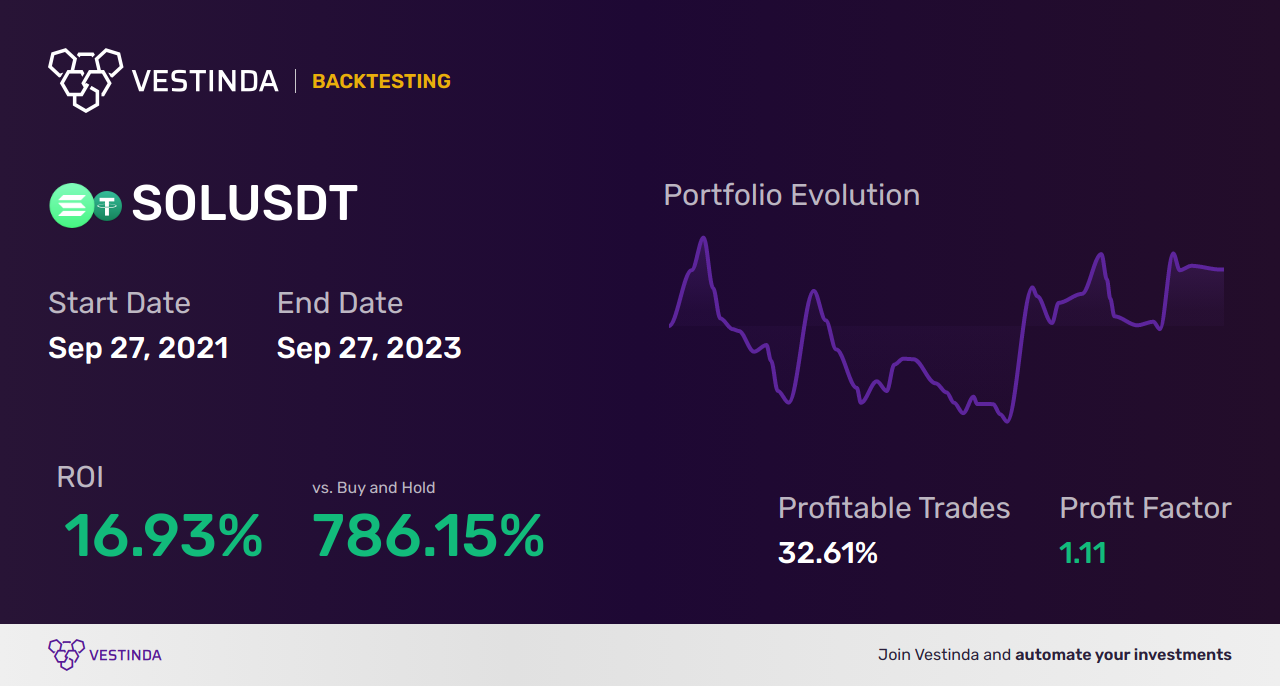
Rigorous backtesting is essential for any strategy. This involves simulating the bot’s performance on historical data to assess its effectiveness and identify potential weaknesses. Risk management is equally important. Bots should have stop-loss orders and other safeguards to limit potential losses in volatile market conditions. A well-defined risk tolerance is paramount.
Top Solana Trading Bots: 2026 Roundup
The Solana bot market is emerging, with several projects gaining traction. Here are some notable options as of late 2026. The bot landscape changes rapidly, and this information is current as of this article's publication.
SolanaMevBot is a prominent player, focused on Maximal Extractable Value (MEV) opportunities. It targets advanced users comfortable with configuring and monitoring complex strategies. The team emphasizes the need for robust infrastructure to handle MEV extraction demands.
Bitget’s Trading Bots offer a beginner-friendly interface with pre-configured strategies like grid trading and dollar-cost averaging. Their platform lowers the barrier to entry for newcomers, offering a welcome pack worth up to 6200 USD as of March 17, 2026. They simplify automating trades.
Orca’s Whirlpool Bots leverage the Orca DEX’s concentrated liquidity pools. These bots capitalize on Orca’s architecture efficiencies. They suit traders already familiar with the Orca ecosystem.
Raydium’s Bots, integrated with the Raydium AMM, offer benefits similar to Orca’s bots, focusing on liquidity provision and arbitrage within the Raydium environment. They provide access to a broader range of trading pairs.
Mango Markets Bots focus on perpetual futures trading, offering advanced order types and margin management tools. They suit experienced traders familiar with leveraged trading.
Athena Trading Bots is a newer entrant gaining attention for its customizable strategies and user-friendly dashboard. They cater to intermediate and advanced users, allowing control over bot behavior.
- SolanaMevBot: Advanced, MEV focused, requires technical expertise.
- Bitget Trading Bots: Beginner-friendly, pre-configured strategies, comprehensive platform.
- Orca’s Whirlpool Bots: Optimized for Orca DEX, concentrated liquidity.
- Raydium’s Bots: Optimized for Raydium AMM, broad trading pair access.
- Mango Markets Bots: Perpetual futures trading, advanced order types.
- Athena Trading Bots: Customizable, user-friendly dashboard, intermediate to advanced.
High-Performance Hardware for Solana Trading Bots

24 Cores (8 Performance-cores and 16 Efficient-cores) · Up to 6.0 GHz Max Turbo Frequency · Intel® UHD Graphics 770
This processor provides the high clock speeds and core count essential for rapid execution of trading algorithms and data analysis.

360mm Radiator · Three AF120 RGB Elite Fans · iCUE Commander CORE for fan and lighting control
Ensures optimal thermal management for sustained high-performance computing under heavy loads, preventing thermal throttling during intensive trading operations.

Intel® Z890 Chipset · DDR5 Memory Support · WiFi 7 and Thunderbolt™ 4 connectivity
This motherboard offers advanced connectivity and robust power delivery, supporting high-speed data transfer and future-proofing the trading rig.

64GB DDR5 RAM · 6000MHz Speed · Intel XMP and AMD EXPO support
Provides ample high-speed memory capacity to handle large datasets and complex algorithmic computations without performance bottlenecks.

2TB NVMe M.2 PCIe Gen4 SSD · Up to 7,450 MB/s Sequential Read Speed · Optimized for high-end computing and gaming
Offers ultra-fast storage access, significantly reducing load times for trading platforms and enabling rapid data retrieval for real-time analysis.
As an Amazon Associate I earn from qualifying purchases. Prices may vary.
Performance Benchmarks: What Do the Numbers Say?
Quantifying Solana trading bot performance is difficult. Direct comparisons are complicated by diverse strategies, varying market conditions, and the opacity surrounding individual trading results. User testimonials and forum discussions suggest profitable outcomes are achievable, but success is not guaranteed.
Anecdotal evidence shows arbitrage bots consistently generating modest profits in stable market conditions, while trend-following bots can yield higher returns during strong bull or bear markets. However, these strategies can also lead to losses during high volatility or unexpected market events. Many users report that consistent profitability requires ongoing monitoring, parameter tuning, and adaptation to changing market dynamics.
Approach performance claims with skepticism. Many bot providers advertise impressive returns, but these figures often represent backtested results or cherry-picked examples. Individual results will vary based on risk tolerance, trading capital, and market conditions. There’s no "one-size-fits-all" solution; what works for one trader may not work for another.
Security Considerations: Protecting Your Solana
Using Solana trading bots introduces security risks. The most significant is the potential compromise of your API keys or wallet. Bots require access to your exchange accounts to execute trades, and if these credentials fall into the wrong hands, you could suffer financial losses.
Use strong, unique passwords and enable two-factor authentication. Review the permissions requested by the bot before granting access. Be wary of bots requesting excessive or unnecessary permissions. Be aware of potential smart contract vulnerabilities in the bot’s code. Reputable bot providers undergo security audits to minimize this risk.
Monitor your account activity for suspicious transactions. Consider using a hardware wallet to store your Solana and limit funds accessible to the bot. Research and due diligence are essential before entrusting your funds to any automated trading system.
The Role of SDKs & Customization
Developers and experienced
The Solana documentation provides resources for building applications on the network, including examples of interacting with Solana programs. TradingView’s Pine Script, while not a native Solana SDK, can be used to develop and backtest strategies that can then be manually implemented or integrated with a Solana bot.
Customization allows you to tailor your trading strategies to specific market conditions, risk preferences, and asset classes. It also enables you to implement advanced features, such as machine learning algorithms and sophisticated risk management techniques. However, building and maintaining a custom bot requires significant technical expertise and ongoing effort.
Looking Ahead: Bot Evolution on Solana
The future of Solana trading bots is likely to be shaped by advancements in artificial intelligence (AI) and machine learning (ML). AI-powered bots could potentially adapt to changing market conditions more effectively than traditional rule-based systems, identifying subtle patterns and optimizing trading strategies in real-time.
We can also expect to see the development of more sophisticated strategies that combine multiple techniques, such as arbitrage, market making, and trend following. The increasing availability of data and analytics tools will further empower bot developers to refine their algorithms and improve performance. As the Solana ecosystem matures, we may see the emergence of specialized bots tailored to specific niches, such as NFT trading or decentralized finance (DeFi) yield farming.
The Solana network itself will likely evolve to better support automated trading, with improvements to transaction throughput, lower fees, and enhanced security features. Ultimately, the goal is to create a more efficient and accessible trading environment for both human and automated participants.
No comments yet. Be the first to share your thoughts!