
Solana staking basics
Staking involves locking your SOL to secure the network in exchange for rewards. Think of it as earning interest, but you're supporting a blockchain instead of a bank. This process is fundamental to Solana's security.
The basic process is pretty straightforward: you delegate your SOL to a validator, who then participates in the network’s consensus mechanism. These validators are responsible for processing transactions and keeping the network running smoothly. By staking with them, you’re essentially voting for them to continue doing a good job. You’ll need a Solana wallet – Phantom, Solflare, or Ledger are popular choices – to get started.
Beyond the rewards, staking is about participation. It strengthens the Solana network, making it more secure and resilient. It’s a way to actively contribute to the ecosystem you believe in. It’s a win-win situation, really: you earn rewards, and Solana gets more secure.
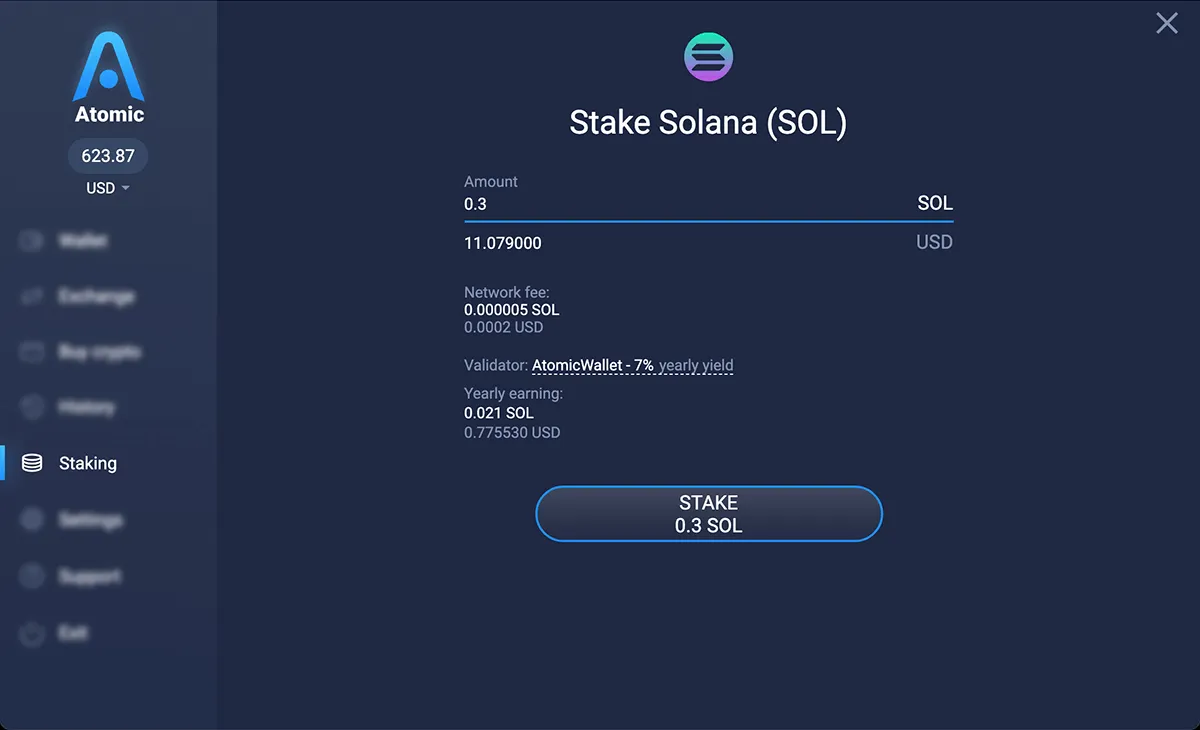
How staking yields work
Okay, let’s talk about how you actually earn rewards when staking SOL. The rewards come from two main sources: transaction fees and block rewards. Every time someone makes a transaction on the Solana network, a small fee is paid. A portion of this fee is distributed to validators, who then share it with their stakers.
Block rewards are created with each new block added to the blockchain. These are essentially newly minted SOL, and they’re also distributed to validators and their stakers. The amount of SOL awarded as block rewards, and therefore your staking yield, isn't fixed, though. It fluctuates based on network activity and the overall staking rate.
You'll notice each validator advertises an Annual Percentage Rate (APR). This is an estimate of the potential rewards you could earn over a year, but it's crucial to remember that it's not guaranteed. Validators also charge a commission for their services, which is deducted from your rewards. You can find detailed information about staking and inflation on the official Solana documentation: Understanding these factors is key to maximizing your returns.
Using a rewards calculator
Want a better idea of what you might earn? A Solana staking rewards calculator can be a really useful tool. These calculators let you input a few key pieces of information to get an estimated return. The main inputs are the amount of SOL you want to stake, the validator’s APR, the validator’s commission rate, and the duration of your staking period.
These calculators aren't crystal balls, though. They provide an estimate based on current conditions. Network activity, the total amount of SOL staked, and changes in the validator’s commission can all impact your actual rewards. It’s best to use these as a guide, not a guarantee.
Many calculators also allow you to factor in compounding, which means reinvesting your earned rewards to stake more SOL. Compounding can significantly boost your returns over time – it’s like earning interest on your interest. It’s a powerful concept, but remember to account for any potential tax implications.
Top Solana Validators for 2026
Reliable validators need high uptime and fair commission rates. While 2026 performance is impossible to guarantee, we can look at established players with consistent track records.
Some validators consistently rank highly in terms of uptime and performance. For example, Marinade Finance, although primarily a liquid staking provider, operates validators and is a prominent name. Another frequently mentioned validator is Figment. Jito is also gaining traction, known for its focus on performance and MEV extraction. These aren’t endorsements, but starting points for your research.
Commission rates vary, so shop around. Lower isn’t always better – you want to ensure the validator has the resources to maintain a stable and secure service. Don’t just look at APR either. Check Solana Beach () for detailed validator stats, including uptime, commission, and voting power. Remember to diversify your stake across multiple validators to mitigate risk.
Here are a few validators to consider as of late 2023/early 2024, but please do your own due diligence before staking:
* Marinade Finance: Known for liquid staking and strong performance.
* Figment: Established validator with a solid reputation.
* Jito: Focuses on performance and MEV extraction.
* Blockdaemon: A well-known infrastructure provider offering Solana staking.
* Allnodes: Offers easy-to-use staking services.
Solana Validator Comparison - Finding the Right Fit for Your Stake (2024)
| Validator Name | Uptime | Commission | Reputation | More Info |
|---|---|---|---|---|
| Blocksmith 🧱 | High | Competitive | Well-Established | https://blocksmith.io/ |
| Laine 🌸 | High | Moderate | Strong Community Focus | https://laine.io/ |
| Evergreen 🌲 | Medium | Lower | Newer, Growing | https://evergreen.vote/ |
| Marinade Finance 🐟 | High | Moderate | Liquid Staking Option | https://marinade.finance/ |
| Solana Beach 🏖️ | Medium | Standard | Good Visibility & Monitoring | https://solanabeach.io/ |
| Humble Staking 🧑🌾 | High | Competitive | Focus on Transparency | https://humblestaking.com/ |
Qualitative comparison based on the article research brief. Confirm current product details in the official docs before making implementation choices.
Risks to consider
Staking isn’t without risk. The biggest concern is slashing. If a validator acts maliciously or experiences significant downtime, their staked SOL—and your staked SOL—can be penalized. This is why choosing a reputable validator with a strong track record is crucial. Validators with robust infrastructure and a history of high uptime are less likely to be slashed.
Validator downtime, even if it doesn't result in slashing, can reduce your rewards. If a validator is offline, it can’t participate in the network, and you won’t earn rewards for that period. Regularly monitor your validator’s performance to ensure they’re consistently online. If you're staking through a DeFi protocol, there's also the risk of impermanent loss, though this is less common with direct staking.
Finally, be aware of lock-up periods. Some staking options require you to lock up your SOL for a specific duration. This means you won’t be able to access your funds during that time. Carefully consider your financial needs before committing to a lock-up period.
Staking Through Exchanges vs. Directly
You have two main options for staking SOL: through a centralized exchange (like Binance or Coinbase) or directly through a Solana wallet. Exchanges offer convenience – it’s usually a simple click of a button to start earning rewards. However, you typically have less control over your SOL, and the exchange may charge higher fees.
Staking directly through a Solana wallet gives you full control over your funds. You choose your validator, and you’re responsible for managing your stake. This requires a bit more technical know-how, but it often results in higher rewards and greater security. Ledger, for example, offers direct Solana staking with their hardware wallets.
Consider your comfort level and technical expertise when deciding which approach is right for you. If you’re new to crypto, an exchange might be a good starting point. If you’re more experienced and prioritize control and rewards, staking directly through a wallet is likely the better option.
Advanced Staking Strategies
Once you’re comfortable with the basics, you can explore more advanced strategies. Liquid staking is gaining popularity. With liquid staking, you receive a token representing your staked SOL (like Marinade Finance’s mSOL or Socean’s scnSOL). You can then use this token in other DeFi applications, increasing your earning potential.
Delegation pools are another option. These allow you to pool your SOL with other stakers to reach the minimum staking requirements for certain validators. However, be aware that delegation pools come with their own risks, such as smart contract vulnerabilities. Do your research before participating in any advanced staking strategies.
Featured Products

Securely manage crypto and NFTs · Accessible way to sign transactions · Compatible with desktop and Android
This hardware wallet offers robust security to protect your SOL while staking, ensuring peace of mind as you maximize your returns.

Secure hardware wallet for cryptocurrency · Steel cold seed storage for enhanced security · Bundle includes Trezor Model T and Billfodl
This hardware wallet offers robust security to protect your SOL while staking, ensuring peace of mind as you maximize your returns.

Open-source crypto wallet · Securely stores private keys and seed phrases · Cold storage for a wide range of tokens and NFTs
This hardware wallet offers robust security to protect your SOL while staking, ensuring peace of mind as you maximize your returns.

Hardware wallet for cryptocurrency storage · Securely stores private keys · Supports various digital assets
This hardware wallet offers robust security to protect your SOL while staking, ensuring peace of mind as you maximize your returns.
As an Amazon Associate I earn from qualifying purchases. Prices may vary.
No comments yet. Be the first to share your thoughts!