
The reality of Solana trading in 2026
Solana is built for automation. With 400ms block times and fees that barely register, it's the only place where high-frequency strategies actually work for retail traders. The ecosystem is bigger now, but that growth brings a level of complexity that's hard to manage manually.
What was once manageable for a dedicated human trader is now often too fast-paced. Keeping up with arbitrage opportunities, reacting to market fluctuations, and even just efficiently executing trades requires tools that can operate at machine speed. This is where Solana trading bots come in.
A particularly pressing concern in this environment is MEV, or Miner Extractable Value. On Solana, this translates to the ability for sophisticated actors to reorder transactions for profit, potentially at the expense of regular traders. MEV protection is becoming less of a "nice-to-have" and more of a necessity.
The Solana network is becoming more nuanced. New protocols and DEXs are launching constantly. For many traders, especially those who aren’t full-time, bots aren't just about speed anymore; they’re about staying informed and competitive. They're a way to participate effectively in a rapidly evolving market.
The cost of MEV
MEV, or Miner Extractable Value, represents the profit that can be made by strategically including, excluding, or reordering transactions within a block. On Solana, this is particularly relevant due to the block time – around 400 milliseconds – and the way transactions are ordered. It’s a different beast than on Proof-of-Work chains like Ethereum, but the principle remains the same: someone can profit from the ordering of transactions.
Common MEV strategies on Solana include front-running, where an actor sees a pending transaction and places their own transaction with a higher fee to get it executed first. Sandwich attacks involve placing a transaction before and after a victim’s transaction, effectively squeezing a profit from the price impact of the victim’s trade. Arbitrage, exploiting price differences across different exchanges, is also a major source of MEV.
For regular traders, MEV manifests as slippage – getting a worse price than expected – or even transaction failures. The impact can range from a few cents to significant losses, especially on larger trades. The faster the market, the more opportunities for MEV extractors, and the greater the risk for those unaware of these tactics.
Solana's block time and transaction ordering create a unique MEV dynamic. Because blocks are produced so quickly, MEV opportunities are fleeting, requiring highly sophisticated bots to identify and capitalize on them. While precise figures for average MEV extracted daily are difficult to pin down and fluctuate wildly, sources suggest it represents a substantial portion of network revenue. Knowing this helps understand the incentive structure driving MEV activity.
Top Solana Trading Bots: 2026 Edition
The bot market is crowded now. I've looked at the current leaders for 2026, though your results will always depend on how you tune your parameters and what the market is doing that day.
BonkBot: BonkBot is a popular choice for arbitrage and market-making strategies. It supports multiple Solana DEXs, including Raydium and Orca, and offers a relatively user-friendly interface. Pricing is subscription-based, starting around $50 per month for basic access, with tiered plans for more advanced features. Users consistently praise its speed and reliability.
Francium: Francium offers a suite of automated trading tools, including grid trading, sniping, and MEV protection. They stand out for their focus on minimizing slippage and maximizing returns. A key feature is their "sandwich attack" mitigation, which actively monitors for and attempts to counteract these types of exploits. Pricing starts at $75/month.
Raydium Automated Market Maker (AMM) Bots: While not a standalone bot, Raydium’s AMM functionality allows users to create custom bots using their API. This requires more technical expertise but offers unparalleled flexibility. Costs are tied to transaction fees on the Raydium DEX.
Solana Sniper: Focused primarily on sniping new token launches, Solana Sniper excels at getting in early on promising projects. It provides real-time alerts and automated buying functionality. However, sniping carries inherent risks, and it’s crucial to do thorough research before investing in any new token. The basic plan costs $30/month.
Athena Trading: Athena Trading is a newer entrant, but quickly gaining traction with its AI-powered trading strategies. It claims to adapt to changing market conditions and optimize trades in real-time. It’s more of a "set it and forget it" solution, but the lack of transparency regarding the AI algorithms is a concern for some users. Pricing is currently in beta, with limited access offered at $100/month.
Orca Bot: Developed by the team behind the popular Orca DEX, this bot focuses on providing liquidity and arbitrage opportunities within the Orca ecosystem. It’s tightly integrated with the DEX and offers low fees. The bot is free to use, but requires users to stake ORCA tokens to access certain features.
Level Up Your Solana Trading Setup: Essential Hardware for Peak Performance

10G & 2.5G Ports for high-speed connectivity · Triple-Level Game Acceleration for reduced latency · Subscription-Free Network Security for enhanced protection
This router provides the ultra-fast and stable network connection essential for real-time trading and MEV protection.

27-inch 4K UHD display for sharp visuals · WLED backlight for consistent brightness · ENERGY STAR and EPEAT certified for energy efficiency
The expansive, high-resolution display offers ample screen real estate to monitor multiple charts and trading bot activities simultaneously.

Quiet Perfect-Stroke keys for comfortable typing · Logi Bolt Technology for secure and reliable wireless connection · Rechargeable battery for long-lasting use
This keyboard ensures comfortable and efficient input for managing your trading strategies and executing commands with precision.
![Perixx PERIBOARD-535BR [Firmware Updated] Wired Ergonomic Mechanical Keyboard - Full-Size - Low-Profile Brown Tactile Switches - NKRO Anti-Ghosting - Compatible with Windows and macOS](https://m.media-amazon.com/images/I/71d5v14gj8L._AC_UY654_QL65_.jpg)
Low-profile brown tactile switches for a satisfying typing feel · NKRO Anti-Ghosting for accurate key registration · Ergonomic design for extended use
Its ergonomic build and tactile switches provide a comfortable and responsive typing experience, crucial for long trading sessions.

Hyperspeed Wireless Technology for lag-free performance · 20K DPI Optical Sensor for precise tracking · 74g Lightweight design for agile movement
This lightweight, high-performance mouse offers the speed and accuracy needed for rapid adjustments and quick decision-making in volatile markets.
As an Amazon Associate I earn from qualifying purchases. Prices may vary.
Features that actually matter
Not all Solana trading bots are created equal. When choosing a bot, prioritize features that align with your trading style and risk tolerance. Backtesting capabilities are absolutely essential. You need to be able to simulate your strategies on historical data to assess their potential profitability.
Customizable strategies are also important. A good bot should allow you to define your own trading rules, including entry and exit points, risk parameters, and position sizing. MEV protection mechanisms are becoming increasingly critical, especially if you’re trading larger amounts. Look for bots that actively mitigate sandwich attacks and front-running.
Risk management tools, such as stop-loss and take-profit orders, are vital for protecting your capital. API access is a plus, allowing you to integrate the bot with other tools and platforms. Understanding the different trading strategies is also key. Grid trading involves placing buy and sell orders at regular intervals, while arbitrage exploits price differences across exchanges. Momentum strategies aim to capitalize on trending assets.
Don't underestimate the importance of a user-friendly interface. A complex bot can be difficult to set up and manage, potentially leading to errors. Consider the bot’s documentation and support resources. A well-documented bot with responsive support can save you a lot of headaches.
Setting Up and Running a Solana Bot
Getting started with a Solana trading bot involves a few key steps. First, you’ll need to choose a bot that suits your needs. Next, you’ll need to set up a Solana wallet – Phantom and Solflare are popular options. Ensure you store your seed phrase securely, as this is the key to your funds.
Once you have a wallet, connect it to your chosen exchange or DEX. Most bots support multiple platforms, including Raydium, Orca, and Serum. Configure your trading strategy within the bot’s interface. This typically involves setting parameters such as the trading pair, order size, and risk tolerance.
Carefully monitor your bot’s performance. Most bots provide real-time data on trades, profits, and losses. Adjust your strategy as needed based on market conditions. Security is paramount. Use strong passwords, enable two-factor authentication, and be wary of phishing attempts.
Many bots offer a testnet mode, allowing you to experiment with your strategies without risking real funds. Take advantage of this feature to familiarize yourself with the bot’s functionality and optimize your settings. Remember to regularly review your bot’s activity and ensure it’s operating as expected.
Backtesting and Strategy Optimization
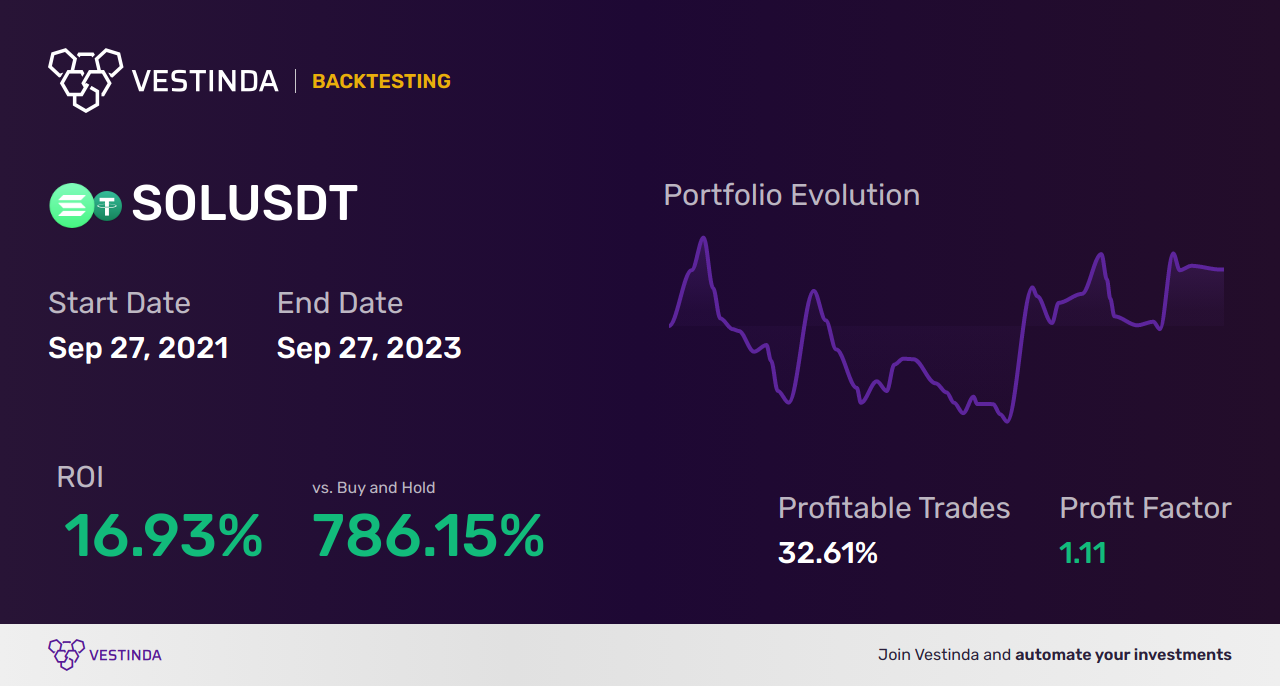
Backtesting is the process of evaluating a trading strategy on historical data. It allows you to simulate how the strategy would have performed in the past, providing valuable insights into its potential profitability and risk. Most Solana trading bots offer built-in backtesting tools, but you can also use third-party platforms.
When interpreting backtesting results, pay attention to key metrics such as profit factor, drawdown, and win rate. Profit factor measures the ratio of gross profit to gross loss. Drawdown represents the maximum peak-to-trough decline in your portfolio value. Win rate indicates the percentage of trades that are profitable.
Be aware of the risk of overfitting – creating a strategy that performs well on historical data but fails to generalize to future market conditions. To avoid overfitting, use a large and diverse dataset, and avoid optimizing your strategy too closely to the historical data. Consider using walk-forward optimization, where you test your strategy on different periods of historical data.
Tools like TradingView can be helpful for visualizing backtesting results and identifying potential weaknesses in your strategy. Remember that past performance is not indicative of future results, but backtesting can provide a valuable starting point for developing a profitable trading strategy.
Solana Trading Bot Backtesting Tool Comparison - 2026
| Tool Name | Data Sources | Strategy Complexity | Ease of Use | Cost |
|---|---|---|---|---|
| Athena | Historical Solana blockchain data 📈 | High | Medium | Generally requires custom subscription based on data usage |
| Evergreen | Public Solana RPC nodes, DEX order books | Medium | High | Tiered plans available, starting with free options for limited backtesting |
| Hydra Trading | Real-time and historical market data feeds | High | Low | Potentially high cost due to specialized data requirements |
| SolForge | Aggregated DEX data, on-chain analytics | Medium | Medium | Subscription based, pricing varies with data access |
| Orca Trader | Primarily Orca DEX data, limited external sources | Low | High | Free to use with Orca trading |
| Raydium Automata | Raydium order book and liquidity pool data | Low | Medium | Integrated with Raydium platform, cost tied to trading fees |
Illustrative comparison based on the article research brief. Verify current pricing, limits, and product details in the official docs before relying on it.
The Future of Solana Bots
The future of Solana bots is bright, with several exciting trends on the horizon. We’re likely to see increased integration of AI and machine learning, allowing bots to adapt to changing market conditions and identify new trading opportunities. More sophisticated MEV protection mechanisms will also become crucial as MEV activity continues to grow.
Decentralized bot marketplaces are beginning to emerge, allowing users to share and monetize their trading strategies. This could lead to a more open and competitive bot ecosystem. The development of more user-friendly interfaces and tools will make automated trading more accessible to a wider audience.
However, potential regulatory challenges loom. As automated trading becomes more prevalent, regulators may introduce new rules and regulations to protect investors and ensure market stability. It’s important to stay informed about these developments and adapt your trading strategies accordingly.
Ultimately, Solana bots are poised to play an increasingly important role in the future of DeFi. As the Solana ecosystem continues to evolve, these tools will become essential for anyone looking to participate effectively in this dynamic and rapidly growing market.
Solana Price Prediction 2026
Bull / Base / Bear scenario analysis
| Timeframe | Bull Case | Base Case | Bear Case | Key Driver |
|---|---|---|---|---|
| 1 Month | $245 | $210 | $165 | Trading bot adoption surge and DeFi volume expansion |
| 3 Months | $320 | $240 | $145 | MEV protection solutions driving institutional adoption |
| 6 Months | $425 | $285 | $125 | Automated trading infrastructure maturation and ecosystem growth |
| 1 Year | $580 | $350 | $95 | Mass bot adoption reaching 50-80% of trading volume |
Price Prediction Summary
Solana's price trajectory through 2026 will be heavily influenced by the proliferation of sophisticated trading bots and MEV protection mechanisms. As automated trading becomes dominant (potentially 50-80% of volume), increased efficiency and institutional participation could drive significant price appreciation, though market volatility remains a key risk factor.
Key Factors Affecting Solana Price
- Trading bot adoption rate and volume penetration
- MEV protection technology development and implementation
- Institutional DeFi participation growth
- Overall crypto market sentiment and regulatory clarity
Disclaimer: Predictions are speculative and not financial advice. Cryptocurrency price predictions are based on current market analysis and may vary significantly due to market volatility, regulatory changes, and other unpredictable factors. Always do your own research before making investment decisions.
No comments yet. Be the first to share your thoughts!