
The state of Solana trading
Solana trading in 2026 is less about the initial hype and more about the math. Daily volume sits around $250 million. While that is up from the $100 million we saw in 2024, the easy growth is over. Traders have stopped chasing the fastest shiny object and started looking at slippage and execution prices.
We're seeing a maturation of the space. Early DEXes that promised everything to everyone are now specializing, and new entrants are attempting to carve out niches. Jupiter, Raydium, and Orca remain the dominant players, collectively handling over 85% of the trading volume, but their roles are evolving. Jupiter has cemented itself as the primary aggregator, while Raydium is leaning into its order book capabilities and Orca continues to prioritize user experience.
The biggest trend is the demand for more sophisticated trading tools. Limit orders, advanced charting, and portfolio management features are no longer 'nice-to-haves' – they’re expectations. Traders are also more aware of the importance of liquidity and are actively seeking out exchanges that can minimize slippage. This has led to increased competition among DEXs to attract liquidity providers.
Jupiter, Raydium, and Orca handle 85% of the volume, but they aren't interchangeable. Choosing between them depends on whether you want the best price via aggregation, the precision of an order book, or a simple interface that doesn't require a manual.
Jupiter: aggregation and beyond
Jupiter has become the go-to destination for many Solana traders, primarily due to its powerful aggregation engine. It doesn’t maintain its own liquidity pools, but instead routes orders across multiple exchanges – Raydium, Orca, Liftoff, and others – to find the best possible price. This aggregation consistently delivers price improvements, often saving traders a significant percentage compared to trading directly on a single exchange.
The benefits of Jupiter’s aggregation are clear: reduced slippage, better execution prices, and access to a wider range of liquidity. Jupiter’s algorithm intelligently splits orders across multiple pools to minimize impact and ensure optimal fills. Recent upgrades have focused on refining this algorithm and adding support for more complex order types.
Jupiter’s ambitions extend beyond simple aggregation. They’ve introduced advanced features like limit orders, which allow traders to set specific price targets. They also launched 'Jupiter V6,' a significant architecture overhaul aimed at improving scalability and adding support for more complex financial instruments. Jupiter is actively building towards becoming a complete trading platform, rather than just a routing service.
The JUP token plays a crucial role in the Jupiter ecosystem. Holders receive a percentage of the platform’s trading fees, incentivizing long-term participation. More recently, JUP has been integrated into Jupiter’s governance system, giving token holders a say in the platform’s development roadmap. The token’s utility continues to expand as Jupiter adds new features and services.
Since 2024, Jupiter has launched a lending protocol, allowing users to borrow and lend assets directly through the platform. They’ve also announced plans to integrate with external margin trading platforms, further expanding their suite of trading tools. Jupiter’s vision is to become the central hub for all things Solana trading.
- Jupiter routes orders across multiple exchanges to find the best price.
- Limit Orders: Allows traders to set specific price targets.
- JUP Token: Provides fee sharing and governance rights.
- Lending Protocol: Enables borrowing and lending of assets.
- V6 Architecture: Improved scalability and functionality.
Essential Tools for Solana DEX Trading in 2026

Securely sign transactions for your cryptocurrency and NFTs · Compatible with Ledger Live desktop and Android applications · Matte Black finish
This hardware wallet ensures secure management of your digital assets, crucial for interacting with decentralized exchanges.
Comprehensive NFT marketplace on the Solana blockchain · Facilitates buying, selling, and minting of NFTs · Supports a wide range of Solana-based NFT projects
Understanding NFT marketplaces is essential for a complete view of the Solana ecosystem beyond just DEXs.

Beginner-friendly guide to using Solscan.io · Covers essential features for navigating the Solana blockchain · Aims to demystify blockchain explorers for new users
This guide provides the foundational knowledge needed to analyze blockchain activity, which is beneficial for understanding DEX performance.
Aggregates DeFi data across multiple blockchains, including Solana · Provides analytics on Total Value Locked (TVL), yields, and protocols · Offers charts and data for informed investment decisions
DeFiLlama is an indispensable tool for gaining insights into the broader Solana DeFi landscape and comparing protocol performance.
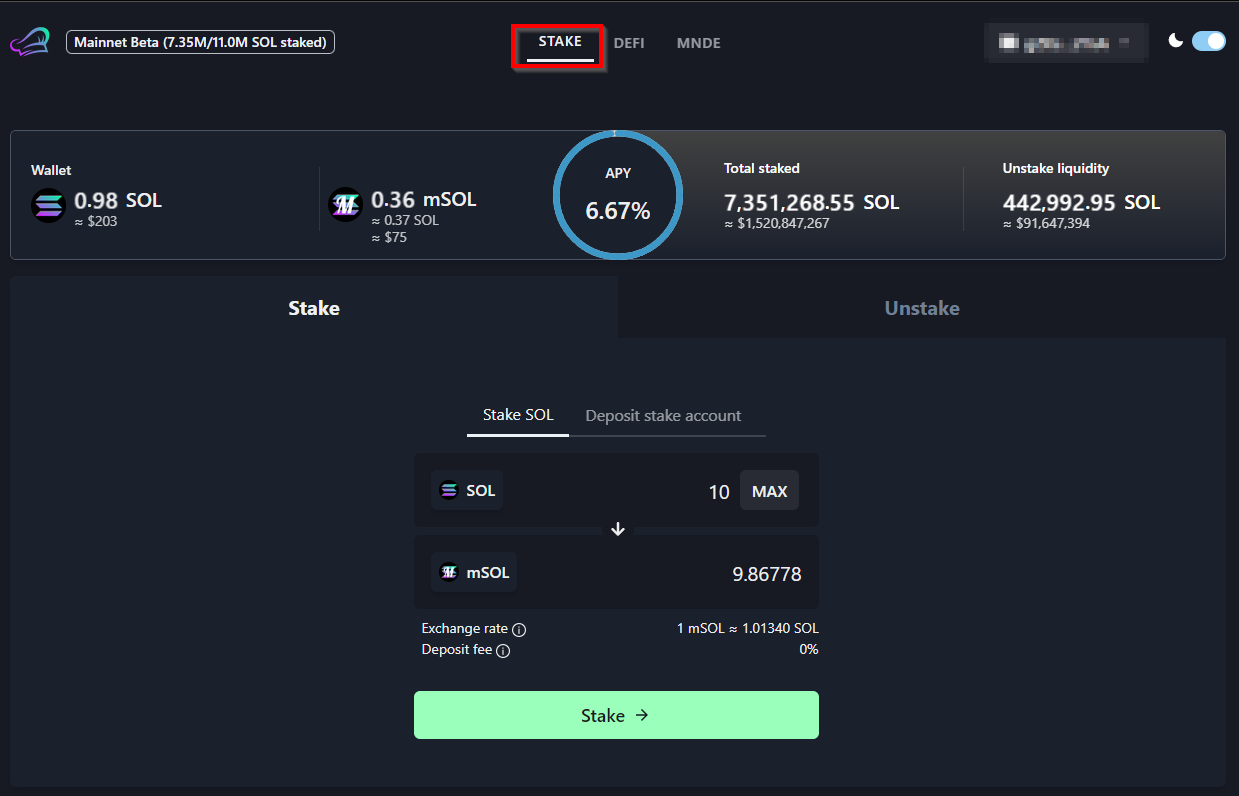
Liquid staking solution for SOL tokens on Solana · Allows users to stake SOL and receive mSOL for liquidity · Automates staking rewards and re-compounding
Marinade Finance offers a streamlined way to participate in Solana's staking economy, complementing your understanding of DeFi yield opportunities.
As an Amazon Associate I earn from qualifying purchases. Prices may vary.
Raydium: order books and AMM evolution
Raydium initially gained prominence as the primary order book DEX within the Serum ecosystem. Following the challenges faced by Serum, Raydium has successfully pivoted, maintaining its order book functionality while also expanding its AMM offerings. This dual approach distinguishes it from Jupiter and Orca.
The key advantage of Raydium’s order book is its ability to provide precise price discovery and efficient order execution, particularly for larger trades. However, order book models require sufficient liquidity to function effectively, which can be a challenge on Solana. Raydium addresses this by integrating with multiple liquidity sources and incentivizing market makers.
Raydium’s AMM offerings have also evolved significantly. They’ve implemented concentrated liquidity pools, similar to Uniswap V3, which allow liquidity providers to earn higher fees by focusing their capital on specific price ranges. They've also experimented with dynamic fees, adjusting fees based on market volatility.
The RAY token is used for staking, providing liquidity, and participating in governance. Staked RAY holders receive a share of the platform’s trading fees and have voting rights on protocol upgrades. Raydium remains a significant player in Solana launchpad activity, hosting initial DEX offerings (IDOs) for promising new projects.
While Raydium no longer holds the same central position it once did within the Serum ecosystem, it has successfully adapted and remains a viable option for traders who prefer the precision of an order book or seek access to specific AMM pools.
Orca: Simplicity and User Focus
Orca has consistently prioritized user experience, aiming to make DeFi accessible to a wider audience. Its interface is clean, intuitive, and easy to navigate, even for beginners. This focus on simplicity has earned Orca a loyal following.
Orca’s Whirlpools are a core component of its AMM design. Whirlpools utilize concentrated liquidity, similar to Uniswap V3, but with a more streamlined and user-friendly interface. They allow liquidity providers to earn higher fees with less complexity.
Orca’s fee structure is relatively straightforward, with a standard swap fee of 0.3%. However, they occasionally run fee promotions and incentives to attract liquidity. Compared to Jupiter, which relies on the fees of underlying exchanges, and Raydium which has variable fees, Orca’s fees are more predictable.
For new Solana users, Orca remains an excellent entry point. Its simple interface and clear instructions make it easy to buy, sell, and swap tokens. Orca has also invested heavily in educational resources and documentation.
The ORCA token is used for staking and governance. Staked ORCA holders receive a share of the platform’s trading fees and have voting rights on protocol upgrades. Orca has also forged strong integrations with other Solana projects, such as Marinade Finance and Solend, expanding its ecosystem.
Fees: A Detailed Breakdown
Comparing trading fees across Jupiter, Raydium, and Orca requires considering more than just the stated swap fee. Slippage, network fees, and the efficiency of the underlying liquidity pools all play a role. Jupiter, as an aggregator, doesn’t have a fixed swap fee, but rather passes through the fees of the exchanges it routes to. This can range from 0.2% to 0.4% depending on the pool.
Raydium’s AMM fees vary based on the pool and the level of impermanent loss protection. Standard pools typically charge 0.3%, while concentrated liquidity pools can have lower fees but higher risk. Order book trades on Raydium have maker/taker fees, generally around 0.1% - 0.2%. Orca consistently charges a 0.3% swap fee, making it the most predictable in terms of cost.
For a $1000 trade, a typical scenario might look like this: Jupiter – $3.50 (including network fees and a 0.3% swap fee on the underlying exchange), Raydium (AMM) – $3.20 (including network fees and a 0.3% swap fee), Raydium (Order Book) – $12 (including network fees and a 0.15% taker fee), Orca – $3.30 (including network fees and a 0.3% swap fee).
These numbers are estimates. If you're moving large blocks or trading illiquid pairs, slippage will eat more of your capital than the base fee. Solana fees stay low, but they do spike when the network gets crowded.
- Jupiter fees are variable, usually between 0.2% and 0.4% including network costs.
- Raydium (AMM): 0.3% (standard), variable (concentrated liquidity).
- Raydium (Order Book): 0.1% - 0.2% (maker/taker fees).
- Orca: 0.3% (consistent).
Solana DEX Comparison 2026: Jupiter vs Raydium vs Orca - Fees, Liquidity & User Experience
| Feature | Jupiter | Raydium | Orca |
|---|---|---|---|
| Fee Structure | Aggregator - aims for best execution across multiple exchanges | Automated Market Maker (AMM) | Automated Market Maker (AMM) |
| Slippage | Generally Lower, due to aggregation | Moderate - can be higher on less liquid pairs | Generally Moderate |
| Network Fee Impact | Can be Lower, optimizes for efficient routing | Moderate | Moderate |
| Discounts/Incentives | Potential for discounts via aggregation and JUP token rewards | Staking rewards for RAY token holders, liquidity mining | Whirlpool incentives, Orca token rewards |
| Liquidity | Accesses liquidity from multiple sources, often highest overall | Significant liquidity, particularly for core SPL assets | Good liquidity, focused on popular trading pairs |
| User Experience | Advanced features, potentially complex for new users | More traditional AMM interface | Simplified, user-friendly interface |
| Routing | Smart order routing across multiple DEXs | Single DEX operation | Single DEX operation |
Qualitative comparison based on the article research brief. Confirm current product details in the official docs before making implementation choices.
Liquidity: Where Does the Volume Go?
Jupiter, due to its aggregation, consistently sees the highest trading volume, averaging around $150 million per day in 2026. Raydium follows with approximately $60 million, and Orca handles around $40 million. However, volume isn’t the only indicator of liquidity. Depth – the amount of liquidity available at various price levels – is equally important.
Raydium generally has the deepest liquidity for pairs involving SOL and major altcoins. Orca excels in providing liquidity for stablecoin pairs and popular DeFi tokens. Jupiter, by routing to these exchanges, benefits from their liquidity, but doesn't directly hold it.
Total Value Locked (TVL) is another metric to consider, but it can be misleading. A high TVL doesn't necessarily translate to good trading experience. Orca currently boasts the highest TVL at $80 million, followed by Raydium at $65 million and Jupiter at $40 million. This difference is largely due to Orca’s focus on attracting liquidity providers with its Whirlpools.
Unique assets are often found on Raydium, particularly those launched through its IDO platform. Orca is known for its support of emerging DeFi projects and often lists new tokens quickly. Jupiter doesn't typically list assets directly, but provides access to them through its aggregation engine.
7-Day Average Trading Volume by DEX & Pair (USD)
Data: AI-generated estimate for illustration
User Experience: Trading and Beyond
Orca consistently receives high marks for its user-friendliness. Its interface is clean, intuitive, and specifically designed for beginners. Connecting a wallet and executing a trade is a seamless process. Jupiter’s interface has improved significantly, but can still feel slightly overwhelming for new users due to the abundance of features.
Raydium’s interface is more complex, reflecting its advanced trading capabilities. The order book interface is particularly daunting for beginners. However, experienced traders will appreciate the granular control it offers. All three platforms support Phantom and Solflare wallets.
Charting tools are available on all three platforms, but Jupiter offers the most comprehensive suite of options, including TradingView integration. Orca’s charting tools are basic but sufficient for simple analysis. Raydium’s charting tools are geared towards advanced traders.
Customer support is a weak point for all three platforms. Documentation is limited, and response times to support requests can be slow. Orca has the most active community forum, which can be a valuable resource for troubleshooting issues.
Here's a quick checklist of UX considerations:
Connecting a wallet is straightforward on all three.
Orca is the easiest for simple swaps.
Jupiter offers the most advanced charting.
Raydium’s order book is complex but powerful.
- Orca: Easiest to use, best for beginners.
- Jupiter: Comprehensive features, steeper learning curve.
- Raydium: Advanced trading tools, complex interface.
No comments yet. Be the first to share your thoughts!