
Solana Wallets in 2026: Why Choosing Matters
Imagine you’re brand new to Solana. You’ve heard about NFTs and want to buy your first one, maybe a cool piece from the Tensor marketplace. You’ll need a Solana wallet to hold your SOL and your NFT, but with several options available, where do you start? This isn't just about storing cryptocurrency; your wallet is your gateway to the entire Solana ecosystem.
The wallet you choose impacts everything from how easily you can buy and sell tokens to how secure your assets are. It affects your experience with decentralized applications (dApps), staking, and even exploring new projects. A user-friendly wallet can make Solana feel accessible and exciting, while a complicated or insecure one can quickly lead to frustration and potential loss.
In 2026, the Solana wallet space has matured, with Solflare and Phantom leading the charge. Both are free to use, but they approach the Solana experience differently. Picking the right one isn't a technicality; it's a decision that shapes your entire journey into the world of Solana.
Solflare: The Established Player, Now with AI?
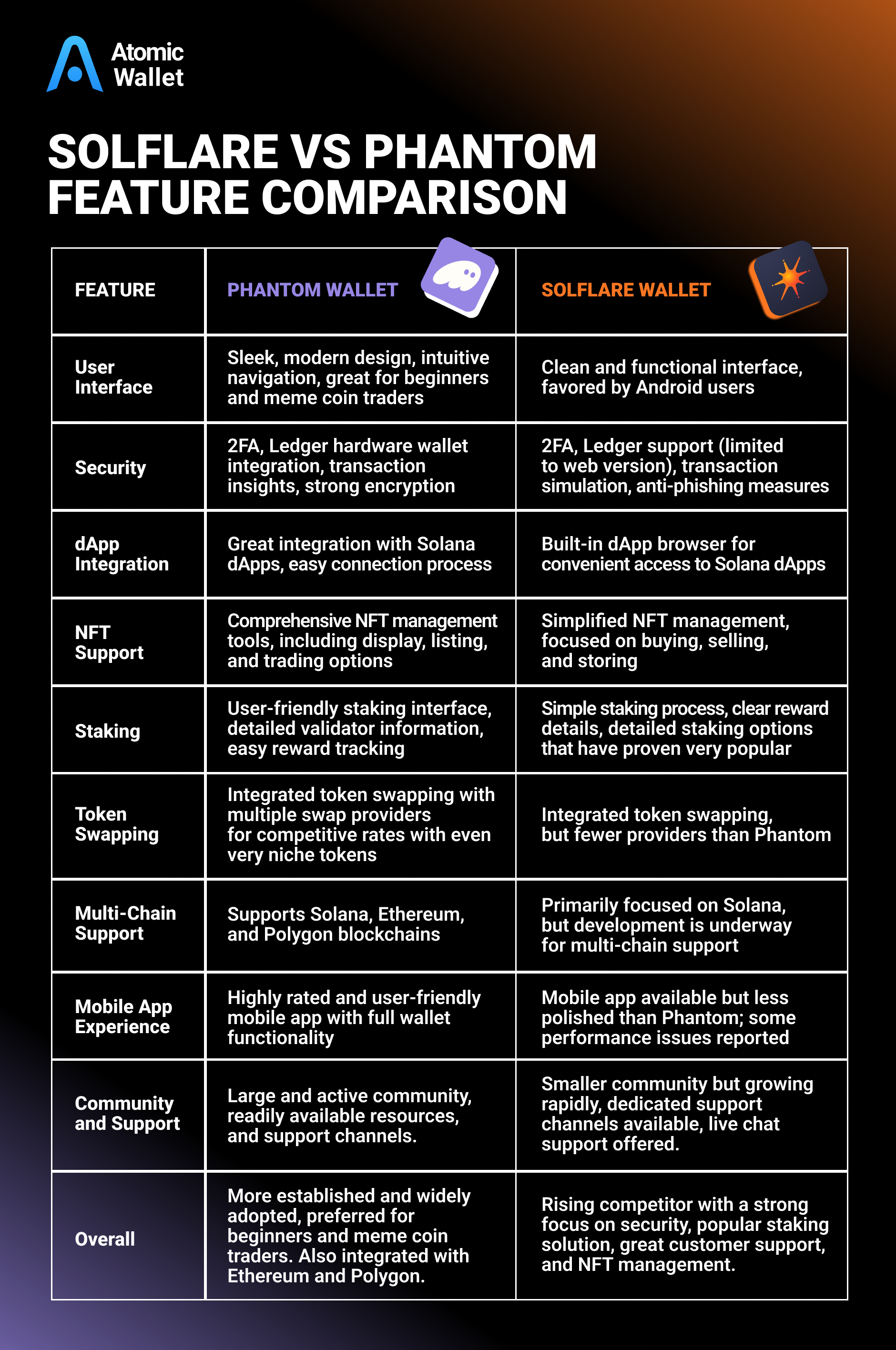
Solflare has been around since the early days of Solana, establishing itself as a reliable and feature-rich wallet. It’s known for being one of the first to offer a comprehensive suite of tools for managing your Solana assets. As of late 2026, Solflare continues to build on this foundation, adding innovative features like 'Magic AI Assistant'.
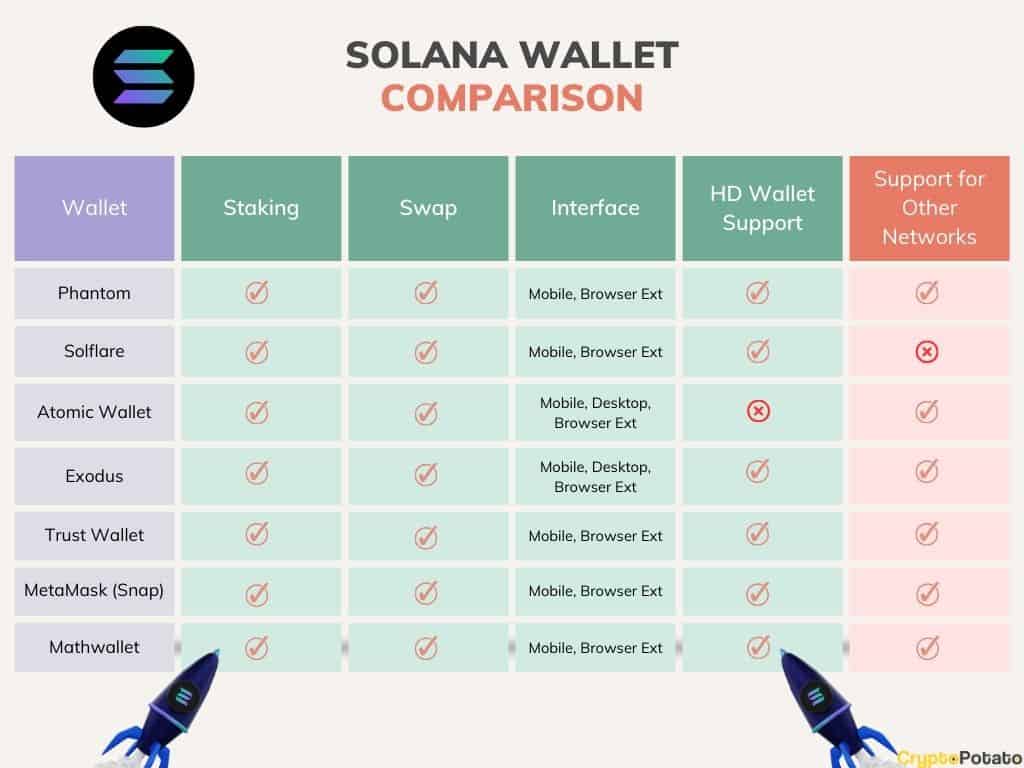
This 'Magic AI Assistant' is a pretty big deal for beginners. It’s essentially an on-chain crypto assistant that can help you understand transactions, decode smart contracts, and even identify potential risks. It’s not about giving financial advice, but providing clarity on what’s happening with your funds. Solflare also offers standard essentials like secure key storage, built-in trading directly within the wallet, staking support, and compatibility with Solana cards.
The 'Shield' feature is Solflare's premium security offering, providing additional protection against phishing and other malicious attacks. It’s a subscription-based service aimed at users who want an extra layer of security. Beyond that, Solflare supports multiple signatures for transactions, and offers a browser extension and mobile app, making it accessible across devices.
Phantom: The Rising Star and Its Focus on NFTs
Phantom quickly gained popularity as a sleek and modern Solana wallet. It's often praised for its user-friendly interface and its strong emphasis on NFTs. While Solflare aims to be an all-in-one solution, Phantom has carved out a niche by catering specifically to the visual and interactive nature of the NFT space.
The Phantom interface is often described as cleaner and more intuitive than Solflare's, especially for those new to Solana. It makes browsing and managing NFTs particularly easy. Like Solflare, Phantom offers core features such as trading, staking, and integration with popular Solana dApps. It also supports hardware wallets for added security.
Phantom has invested heavily in security improvements over the years, addressing early concerns about vulnerabilities. While specific details about their security architecture aren't always public, the team actively engages with the community and responds to security audits. They have also expanded their support for Solana Program Library (SPL) tokens, making it easier to manage a wider variety of assets.
Security: Where Do Solflare and Phantom Stand in 2026?
Security is paramount when dealing with cryptocurrency, and both Solflare and Phantom take it seriously. Both wallets utilize seed phrases, which are 12 or 24-word phrases that allow you to recover your wallet if you lose access to your device. It’s absolutely critical to store your seed phrase securely offline – never share it with anyone.
Solflare offers multi-signature support, allowing you to require multiple approvals for transactions, adding an extra layer of security. Their 'Shield' feature provides real-time threat detection and protection against phishing attacks. Phantom also employs robust security measures, including hardware wallet integration and regular security audits. Both wallets encourage users to enable two-factor authentication (2FA) for added protection.
While neither wallet has been completely immune to exploits in the past, both teams have responded quickly to address vulnerabilities. Both wallets are generally considered secure, but it's important to remember that no wallet is foolproof. User responsibility, such as practicing good security hygiene and being cautious of phishing attempts, remains the most important defense.
- Secure Seed Phrase Storage: Both wallets emphasize the importance of offline storage.
- Hardware Wallet Support: Both integrate with popular hardware wallets like Ledger and Trezor.
- Regular Security Audits: Both teams conduct regular audits to identify and address vulnerabilities.
User Experience: Which Wallet is Easier to Learn?
From a user experience perspective, Phantom generally receives praise for its intuitive and modern interface. It feels cleaner and more visually appealing, making it potentially easier for beginners to navigate. The NFT focus is immediately apparent, with a dedicated section for viewing and managing your digital collectibles.
Solflare, while still user-friendly, can feel a bit more cluttered due to its wider range of features. There’s more to learn, but that also means more functionality. The mobile app experience for both wallets is generally smooth and responsive, but Phantom's interface translates particularly well to smaller screens.
Ultimately, 'easier' is subjective. Some users might prefer Solflare’s comprehensive approach, while others will appreciate Phantom’s streamlined design. It really comes down to personal preference and what you prioritize in a wallet.
What Solana Users Are Saying: Real-World Feedback
Recent discussions on Reddit’s r/Solana show a mixed bag of opinions. Many new users praise Phantom for its ease of use, specifically when it comes to displaying and interacting with NFTs. One user commented, “Phantom just feels right. It’s so easy to see my apes and everything is just laid out nicely.”
However, some long-time Solana users express a preference for Solflare’s more robust features. A tweet from @SolanaDevGuy on November 12th, 2026, stated, “Solflare’s AI assistant is a game changer. Being able to understand what a smart contract is doing before I sign a transaction gives me real peace of mind.”
There are also occasional complaints about transaction speeds and occasional glitches with both wallets, but these seem to be intermittent and often related to network congestion. Overall, the community sentiment is that both wallets are solid choices, with Phantom leaning towards NFT enthusiasts and Solflare appealing to those who want a more comprehensive toolset.
Beyond the Basics: Features You Might Not Know About
Solflare’s integration with Solana Cards is a standout feature. These cards allow you to manage your Solana assets and interact with dApps using a physical card, adding an extra layer of security and convenience. Phantom, on the other hand, has been actively developing features for advanced NFT collectors, such as detailed rarity rankings and analytics.
Solflare also offers a more extensive range of trading options, including limit orders and stop-loss orders. Phantom’s focus is more on the immediate buying and selling of NFTs. Both wallets support custom token lists, allowing you to add and manage tokens that aren't officially listed on major exchanges.
Both wallets are constantly evolving, with new features and improvements being added regularly. Staying up-to-date with the latest updates is crucial to maximizing your Solana experience.
Solflare or Phantom: Which Should *You* Choose in 2026?
There’s no single "best’ Solana wallet; it depends on your needs and priorities. If you"re primarily interested in NFTs and value a clean, intuitive interface, Phantom is an excellent choice. Its focus on visual appeal and ease of use makes it a great starting point for beginners.
If you prefer a more comprehensive wallet with a wider range of features, including advanced trading tools and the innovative 'Magic AI Assistant', Solflare is a solid option. It’s a well-established wallet with a strong reputation for security and reliability. Ultimately, the best way to decide is to try both wallets and see which one feels more comfortable for you.
No comments yet. Be the first to share your thoughts!