
Imagine you're excited to finally buy your first Solana NFT – maybe a piece of digital art, or a key to an exclusive online community. But before you can do anything on the Solana blockchain, you need a wallet. It’s not like the leather one in your pocket. This is a digital gateway to your crypto assets, and choosing the right one is a surprisingly big deal.
A Solana wallet holds the private keys that control your SOL, NFTs, and other tokens. It’s how you interact with decentralized applications (dApps), participate in DeFi, and generally experience everything the Solana ecosystem has to offer. Picking the wrong wallet can mean a confusing experience, security vulnerabilities, or limited access to certain features.
Solana has exploded in popularity, and with that growth comes increasing complexity. What was once a simple ecosystem is now brimming with new protocols, dApps, and opportunities. Your wallet is your essential tool for navigating this landscape, and the choice you make today could impact your experience for a long time. It’s worth spending a little time to understand your options.
Solflare has been around for a while, and it shows. It’s built a reputation as a reliable and feature-rich wallet, and as of late 2026, it remains a popular choice for Solana users. One of its strongest points is its focus on security. Solflare supports hardware wallets like Ledger and Trezor, giving you an extra layer of protection for your assets.
Beyond hardware wallet support, Solflare offers multi-sig options which are a big plus for users who want an additional layer of security. The user interface is generally clean and functional, although some users find it a little cluttered with options. It includes built-in trading features, allowing you to swap tokens directly within the wallet, and it also makes staking SOL straightforward.
Solflare recently introduced its 'Magic AI Assistant,' which aims to simplify complex tasks and provide guidance to users. I’ve tested it, and while it’s a neat idea, it’s still a bit hit-or-miss. Sometimes it provides genuinely helpful information, other times it feels like a glorified search engine. It’s definitely still evolving, and its usefulness will likely improve over time.
They’ve also maintained a strong commitment to adding new features and integrations. You can find a comprehensive list of updates on their website. They really seem to be trying to be a one-stop shop for Solana users.
- Hardware wallet support (Ledger, Trezor)
- Multi-sig options
- Built-in trading
- Staking capabilities
- Magic AI Assistant
Phantom has quickly become a major contender in the Solana wallet space. It’s known for its speed and incredibly user-friendly design. Transactions generally feel faster in Phantom compared to Solflare, though the difference isn’t always noticeable. The interface is sleek and minimalist, which many users find refreshing.
Phantom really shines when it comes to NFTs. It has a dedicated NFT gallery that makes it easy to view, manage, and showcase your collection. It integrates seamlessly with popular Solana NFT marketplaces like Magic Eden and Tensor, making buying and selling NFTs a breeze. This makes it a favorite amongst NFT collectors.
The transaction signing process in Phantom feels smoother and more intuitive than Solflare’s, at least to me. It simplifies the process of approving transactions, which can be a relief for beginners. It's also worth noting that Phantom has a strong mobile presence, with a well-designed iOS and Android app.
However, some users have expressed concerns about Phantom’s relatively newer status. While it’s gained a lot of trust, it hasn’t been battle-tested for as long as Solflare. It's important to weigh that when considering your security needs.
Security is paramount when it comes to crypto wallets. Both Solflare and Phantom take security seriously, but they approach it slightly differently. Both wallets emphasize the importance of securely storing your seed phrase – the 12 or 24-word recovery phrase that allows you to access your wallet if you lose your device.
Solflare’s support for hardware wallets gives it a significant edge in terms of security. Hardware wallets store your private keys offline, making them much more resistant to hacking attempts. Phantom also supports hardware wallets, but it was added later and may not be as seamlessly integrated as in Solflare. Both wallets actively work to protect against phishing attacks, but vigilance is always required on the user’s end.
It’s important to remember that self-custody comes with responsibility. You are in control of your private keys, which means you are also responsible for keeping them safe. Never share your seed phrase with anyone, and be wary of suspicious links or websites. Both wallets provide resources to help you understand best practices for wallet security, but ultimately, it’s up to you to stay safe.
Both Solflare and Phantom allow you to swap tokens directly within the wallet, but their approaches differ. Solflare’s trading feature is more integrated with various decentralized exchanges (DEXs), giving you access to a wider range of pools and tokens. Phantom, while improving, is still catching up in this area.
Phantom’s integration with popular Solana marketplaces is a major advantage for NFT traders. It makes buying and selling NFTs incredibly easy. Both wallets handle slippage and transaction confirmations in a similar way, allowing you to adjust slippage tolerance and monitor transaction status. Fees associated with trading through each wallet are primarily network transaction fees, which are paid to the Solana blockchain, not the wallet provider.
If you plan to actively participate in DeFi protocols beyond simple token swaps, Solflare might be the better choice due to its broader DEX integration. However, for most casual users, both wallets will suffice for basic trading needs.
User experience is subjective, but generally, Phantom is considered to have a more modern and intuitive interface. It’s cleaner, faster, and easier to navigate, especially for beginners. Sending and receiving tokens is a straightforward process, and the NFT gallery is a standout feature. I find myself using Phantom more often for quick transactions and NFT interactions.
Solflare’s interface is functional but can feel a bit cluttered. It offers more features, which can be overwhelming for new users. The mobile app experience is comparable between the two wallets, but Phantom’s app feels slightly more polished. Customization options are limited in both wallets.
Ultimately, the best user experience will depend on your personal preferences. If you value simplicity and speed, Phantom is the clear winner. If you prefer a more feature-rich wallet and don’t mind a slightly steeper learning curve, Solflare might be a better fit.
Both Solflare and Phantom have active communities on platforms like Twitter and Discord. Solflare’s team seems to be very responsive to user feedback and bug reports, often engaging directly with the community. Phantom’s team is also active, but they’ve experienced periods of slower response times due to rapid growth.
Both wallets are actively developing new features and integrations. Solflare is focused on expanding its DeFi capabilities and improving its AI assistant. Phantom is focused on enhancing its NFT features and optimizing performance. It’s a good sign that both teams are committed to innovation.
The general sentiment towards both wallets within the Solana community is positive, but there’s a noticeable divide. Phantom has a strong following among NFT enthusiasts, while Solflare retains a loyal base of users who appreciate its security features and established reputation.
Choosing between Solflare and Phantom depends on your individual needs and priorities. If you prioritize security and an established reputation, and you plan to actively participate in DeFi, Solflare is the better choice. If you prioritize speed, simplicity, and a user-friendly NFT experience, Phantom is the way to go.
Consider this quick guide: if you're new to Solana and want the easiest possible experience, start with Phantom. If you're concerned about security and plan to hold significant amounts of SOL or NFTs, prioritize Solflare. Both wallets are excellent options, and you can always try both to see which one you prefer.
Solflare vs Phantom: A Beginner's Comparison (2026)
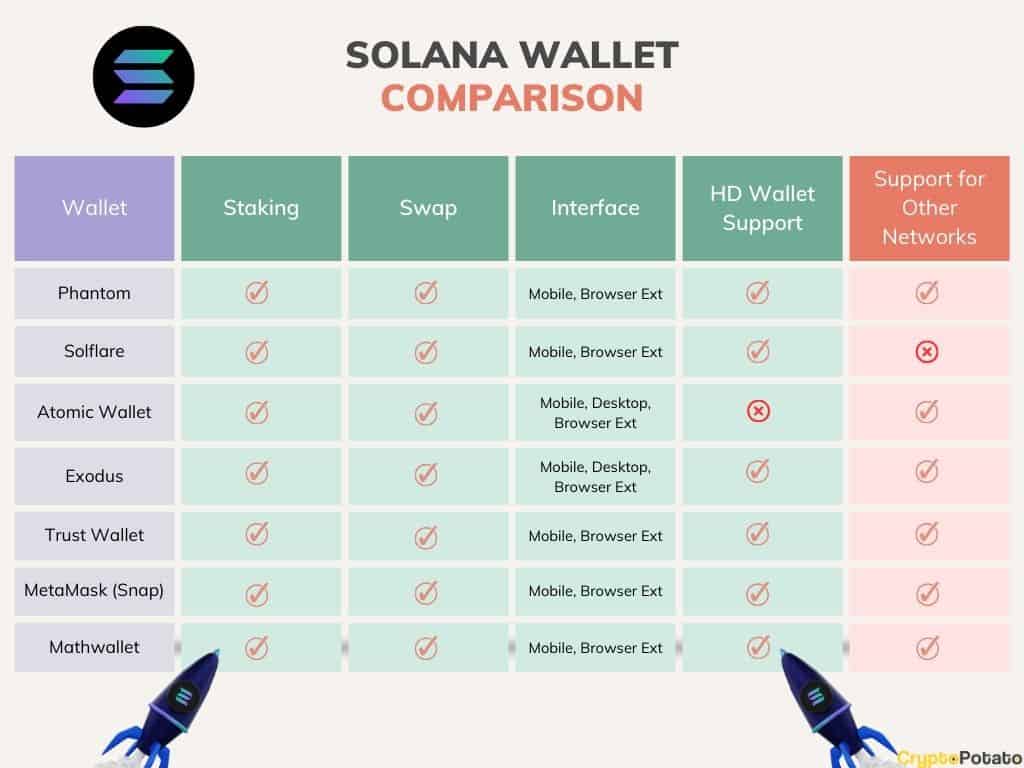
| Criteria | Solflare | Phantom |
|---|---|---|
| Security | High | High |
| Ease of Use | Medium | High |
| Trading Features | High | Medium |
| NFT Support | Medium | High |
| Community Support | Medium | Medium |
| Future Development | Medium | Medium |
Illustrative comparison based on the article research brief. Verify current pricing, limits, and product details in the official docs before relying on it.
No comments yet. Be the first to share your thoughts!