
Solana Wallets in 2026: Why Choosing Matters
Imagine you’re excited to finally buy your first Solana NFT – maybe a piece from a new artist you admire. Before you can even think about making that purchase, you need a Solana wallet. It’s not an afterthought, it’s the very first step. Your wallet isn't just where your Solana (SOL) and NFTs are stored; it’s your key to the entire ecosystem.
Choosing the right wallet can really shape your experience. A good wallet makes everything smoother, from buying and selling to participating in DeFi and exploring new projects. A poorly chosen one can be confusing, insecure, or simply lack the features you need. The Solana ecosystem has grown immensely, and with that growth comes more choice – and more complexity.
Security is, of course, paramount. Solana wallets are non-custodial, meaning you control your private keys. This is powerful, but it also means you are responsible for keeping those keys safe. Losing your seed phrase is like losing access to your bank account, so the initial setup and ongoing security practices are incredibly important.
Solflare: The All-in-One Solana Experience
Solflare positions itself as a complete Solana hub, and in 2026, it largely delivers on that promise. It's available as a browser extension, mobile app, and even a hardware wallet integration, offering flexibility for how you interact with Solana. As of November 15th, 2026, Solflare boasts over 51,000 ratings, indicating a large and active user base.
One of Solflare’s biggest strengths is its integrated trading features. You can swap tokens, trade on various Solana DEXs, and access DeFi protocols all within the wallet itself. This is incredibly convenient for users who want to manage their entire Solana portfolio in one place. They've also introduced the Magic AI Assistant, a new feature designed to help navigate the complexities of Solana.
Solflare's emphasis on security is also noteworthy. Beyond standard seed phrase management, they offer 'Shield,' a feature designed to protect against malicious transactions and phishing attempts. This adds an extra layer of security that many users appreciate. However, the sheer number of features can be overwhelming for beginners. There’s a learning curve involved in mastering everything Solflare has to offer.
While the wealth of features is a plus for experienced users, newcomers might find the interface a bit cluttered. It can take some time to understand where everything is and how it works. But Solflare’s documentation and support resources are fairly comprehensive, which helps mitigate this issue.
- Integrated Trading: Swap tokens and access DEXs directly within the wallet.
- Staking: Earn rewards by staking your SOL.
- Magic AI Assistant: Get personalized guidance and support.
- Shield: Enhanced security against malicious transactions.
Phantom: Simplicity and Speed for Solana Transactions
Phantom has earned a reputation for being the fastest and most streamlined Solana wallet. Its interface is clean and intuitive, making it a favorite among users who prioritize speed and simplicity. It's particularly popular with NFT traders who need to quickly buy, sell, and transfer assets.
Compared to Solflare, Phantom focuses on core Solana activities: sending and receiving SOL, trading NFTs, and managing your portfolio. It doesn’t try to be everything to everyone, and that’s part of its appeal. The wallet’s speed is genuinely noticeable, especially when compared to some of the more feature-rich alternatives.
However, this focus on simplicity comes with trade-offs. Phantom lacks some of the advanced features found in Solflare, such as integrated staking or the Magic AI Assistant. While you can connect to DeFi protocols, the experience isn't as seamless as it is with Solflare. If you're a beginner who wants everything in one place, Phantom might feel a little limited.
Security Face-Off: How Safe Are Your Solana Assets?
Both Solflare and Phantom are non-custodial wallets, meaning you have complete control over your private keys. This is great for security, but it also means you’re solely responsible for protecting them. The biggest risk is losing or compromising your seed phrase – a 12 or 24-word phrase that allows you to recover your wallet.
Both wallets support hardware wallet integration, which is the most secure way to store your Solana. Compatible hardware wallets include Ledger and Trezor. Using a hardware wallet adds a physical layer of security, making it much harder for hackers to access your funds. Both wallets also offer standard security features like seed phrase encryption.
Solflare’s "Shield’ feature provides an additional layer of protection against malicious transactions. It analyzes transactions for potential risks and warns you before you sign them. Phantom doesn"t have an equivalent feature, so users need to be extra vigilant when reviewing transactions. The official documentation for both wallets emphasizes the importance of verifying transaction details carefully before signing.
User Voices: What Solana Users Are Saying
Real-world experiences offer valuable insights. On social media, users frequently praise Phantom for its speed and ease of use, particularly when trading NFTs. Many new Solana users recommend Phantom as a good starting point. However, some users have reported occasional issues with transaction errors.
Reddit discussions show a more mixed bag. Some users appreciate Solflare’s comprehensive features, while others find the interface overwhelming. Security concerns are also frequently raised, with users emphasizing the importance of using hardware wallets and being cautious of phishing scams. It’s clear that both wallets have their passionate supporters and detractors.
Trading and DeFi: Where Do These Wallets Shine?
Solflare excels when it comes to integrated trading and DeFi. You can easily swap tokens using built-in swap functionality and connect to popular Solana DEXs like Raydium and Orca directly within the wallet. This makes it convenient for users who want to actively manage their portfolio and participate in DeFi protocols.
Phantom also allows you to connect to DEXs, but the experience isn’t as seamless. You typically need to use a third-party interface or manually enter contract addresses. This can be more cumbersome for beginners. However, for quick token swaps, Phantom is still quite efficient.
For more advanced DeFi users who are comfortable with multiple platforms, the difference isn't as significant. But if you’re new to DeFi, Solflare's integrated features can save you a lot of time and effort.
NFT Collectors: A Wallet for Every Style
Both Solflare and Phantom handle NFTs well, allowing you to view, send, and receive them. Phantom has historically been favored by NFT traders due to its speed and streamlined interface. It makes browsing and managing your NFT collection a breeze.
Solflare offers more detailed NFT information, including rarity scores and market data. This can be helpful for collectors who want to research their investments. However, the NFT display isn’t quite as visually appealing as it is in Phantom. Ultimately, the best wallet for NFT collectors comes down to personal preference.
Both wallets support popular NFT marketplaces like Magic Eden and Tensor. The process of buying, selling, and transferring NFTs is relatively straightforward in both wallets.
Solflare vs Phantom: A Quick Decision Guide
Choosing between Solflare and Phantom isn’t about picking a "winner.’ It’s about finding the wallet that best suits your needs and experience level. Here"s a quick guide to help you decide.
Choose Solflare if: You want an all-in-one Solana hub with integrated trading, staking, and advanced security features. You’re comfortable with a more complex interface and are willing to spend time learning the ropes. You want a wallet that can grow with you as you explore more of the Solana ecosystem.
Choose Phantom if: You prioritize speed, simplicity, and a clean interface. You’re primarily interested in trading NFTs and making quick transactions. You want a wallet that’s easy to use and doesn’t require a steep learning curve.
- Ease of Use: Phantom is generally easier for beginners.
- Features: Solflare offers more features.
- Security: Both are secure, but Solflare has the 'Shield' feature.
- Speed: Phantom is known for its speed.
- Cost: Both wallets are free to use.
Solflare vs. Phantom: A Beginner's Comparison (2026)
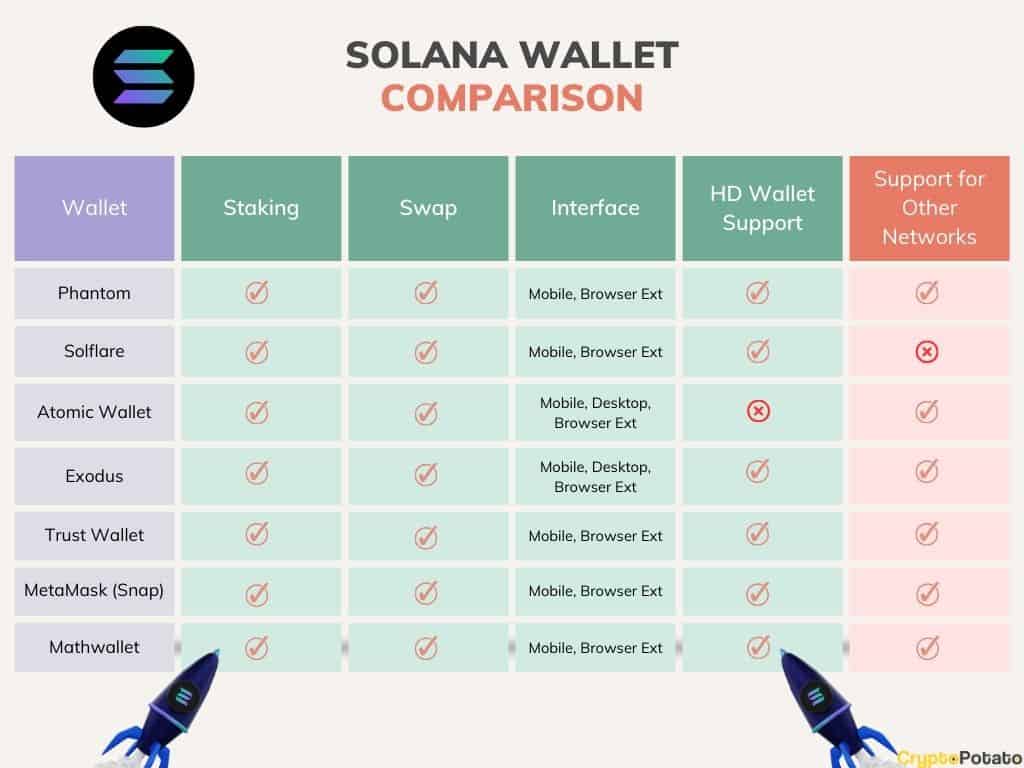
| Criteria | Solflare | Phantom |
|---|---|---|
| Ease of Use | Intermediate | Beginner |
| Security | High | High |
| Features | Standard | Extensive |
| NFT Support | Good | Excellent |
| DeFi Integration | Moderate | Comprehensive |
| Mobile App Availability | Yes | Yes |
| Hardware Wallet Support | Yes | Yes |
Illustrative comparison based on the article research brief. Verify current pricing, limits, and product details in the official docs before relying on it.
No comments yet. Be the first to share your thoughts!