
Solana yield in 2026
Solana is a major hub for decentralized finance now. Since 2024, the total value locked has climbed because the network is fast and cheap. Most people are here for the staking and lending protocols to earn on their holdings.
In 2026, we anticipate continued innovation in Solana DeFi, with a focus on capital efficiency, risk management, and user experience. The emergence of more sophisticated yield strategies, like automated vault optimizers and options-based yield enhancement, is becoming more common. Furthermore, increased institutional interest and the potential approval of spot crypto ETFs are expected to inject further liquidity into the ecosystem.
DeFi is risky. You have to watch out for smart contract bugs, impermanent loss, and liquidations. These 2026 APY projections are just guesses based on how things look now; they will change. Don't just chase the highest number.
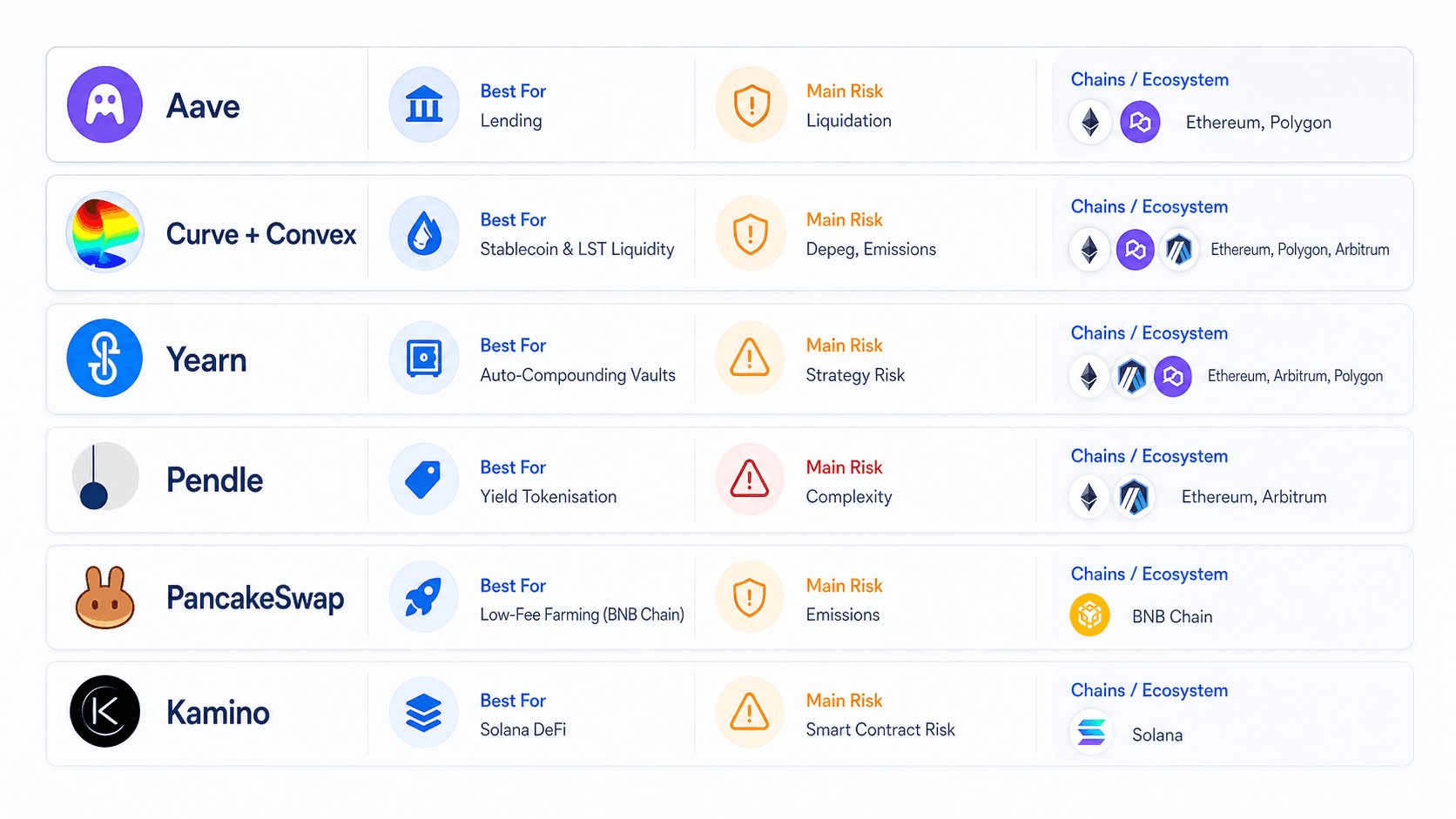
Top 10 yield platforms
Selecting the best Solana DeFi platform hinges on your risk tolerance and investment strategy. Here’s a rundown of ten prominent platforms, current APY ranges (as of late 2025), risk assessments, and where to find more information. Keep in mind that APYs are dynamic and fluctuate with market conditions.
Marinade Finance (mSOL liquid staking): Marinade allows users to stake SOL without locking up their tokens, receiving mSOL in return, which can be used across other DeFi protocols. APYs currently range from 6-8% for staking SOL. Risk score: Low-Medium.
Raydium (AMM and liquidity farming): Raydium is a leading automated market maker (AMM) and liquidity provider on Solana. Yields vary greatly depending on the pool, but can range from 15-40% for providing liquidity. Risk score: Medium-High (impermanent loss is a significant risk).
Orca (concentrated liquidity pools): Orca offers concentrated liquidity pools, allowing liquidity providers to earn higher fees by focusing liquidity within specific price ranges. APYs typically range from 20-50%. Risk score: Medium-High (impermanent loss and smart contract risk).
Solend (lending and borrowing protocol): Solend facilitates lending and borrowing of various Solana tokens. Lending APYs can range from 5-12%, while borrowing rates fluctuate based on utilization. Risk score: Medium (liquidation risk).
Tulip Protocol (yield farming optimizer): Tulip Protocol automates yield farming strategies, optimizing returns across multiple protocols. APYs vary widely depending on the vaults, ranging from 25-60%. Risk score: Medium-High (smart contract risk and vault complexities).
Francium (leveraged yield farming): Francium allows users to amplify their yield farming returns through leverage. APYs can be exceptionally high (50-100%+), but come with significantly increased risk. Risk score: High (liquidation risk and smart contract risk).
Saber (stablecoin AMM): Saber specializes in stablecoin swaps, offering low slippage and competitive yields. APYs for providing liquidity typically range from 8-15%. Risk score: Low-Medium (relatively lower impermanent loss).
Jupiter (DCA and yield strategies): Jupiter is an aggregator that offers dollar-cost averaging (DCA) and yield-generating strategies across multiple Solana protocols. Yields vary depending on the strategy, from 5-20%. Risk score: Low-Medium (depends on underlying protocols).
Drift Protocol (perpetuals and yield): Drift Protocol is a decentralized exchange for perpetual contracts, offering yield opportunities through liquidity provision and trading. APYs can range from 10-30%. Risk score: Medium-High (trading and smart contract risk).
Kamino Finance (automated liquidity management): Kamino Finance provides automated liquidity management strategies, optimizing yields for liquidity providers. APYs range from 15-45%. Risk score: Medium-High (smart contract risk and vault complexities).
Top 10 Solana DeFi Platforms for Maximum Yield in 2026: APY Rankings & Risk Analysis
| Platform Name | Description | APY Range (Staking) | APY Range (Lending) | Risk Score | Audit Status | Link to Documentation |
|---|---|---|---|---|---|---|
| Marinade Finance | Liquid staking protocol for SOL, allowing users to stake SOL and receive mSOL in return. mSOL can be used across other DeFi applications. | Variable, dependent on network activity | Not primarily a lending platform | Med | Yes | https://docs.marinade.finance/ |
| Raydium | An Automated Market Maker (AMM) and liquidity provider built on Solana, offering swap, liquidity farming, and launchpad services. | 5% - 20% (LP) | 2% - 10% | Med | Yes | https://docs.raydium.io/ |
| Orca | Concentrated liquidity pools designed for efficient trading and yield farming on Solana. | 8% - 25% (LP) | Not primarily a lending platform | Med | Yes | https://docs.orca.so/ |
| Solend | A decentralized lending and borrowing protocol enabling users to earn interest on deposits and borrow assets. | 3% - 12% | 5% - 18% | High | Yes | https://docs.solend.fi/ |
| Tulip Protocol | A yield farming optimizer designed to automate yield farming strategies on Solana. | Variable, dependent on optimized farms | Not primarily a lending platform | Med | Partial | https://docs.tulip.garden/ |
| Francium | A leveraged yield farming protocol allowing users to amplify their farming rewards. | Variable, higher risk/reward | Not primarily a lending platform | High | Partial | https://docs.francium.io/ |
| Saber | A stablecoin AMM focused on providing liquidity for stablecoin pairs on Solana. | 2% - 8% (LP) | Not primarily a lending platform | Low | Yes | https://docs.saber.so/ |
| Jupiter | A decentralized exchange aggregator providing best price execution and yield strategies across Solana. | Variable, dependent on strategy | Not primarily a lending platform | Med | Yes | https://docs.jupiter.exchange/ |
| Drift Protocol | A decentralized perpetuals exchange offering trading and yield farming opportunities. | Variable, dependent on market conditions | Not primarily a lending platform | High | Partial | https://docs.drift.trade/ |
| Kamino Finance | Automated liquidity management protocol designed to optimize yield and reduce impermanent loss. | 5% - 15% (LP) | 2% - 10% | Med | Yes | https://docs.kaminofinance.io/ |
Illustrative comparison based on the article research brief. Verify current pricing, limits, and product details in the official docs before relying on it.
Essential Tools for Solana DeFi Yield Maximization

Securely manage cryptocurrencies and NFTs · Compatible with desktop and Android devices · Provides offline storage for private keys
This hardware wallet offers robust security for managing digital assets, essential for interacting with Solana DeFi protocols.
Securely manage cryptocurrencies and NFTs · Compatible with desktop and Android devices · Provides offline storage for private keys
This hardware wallet offers robust security for managing digital assets, essential for interacting with Solana DeFi protocols.

Biometric fingerprint authentication for enhanced security · Secure Bluetooth connectivity for convenient access · Supports a wide range of cryptocurrencies including Solana
The D'CENT hardware wallet provides advanced security features like biometric authentication, ensuring the safe management of Solana-based assets.

Securely manage cryptocurrencies and NFTs · Compatible with desktop and Android devices · Provides offline storage for private keys
This hardware wallet offers robust security for managing digital assets, essential for interacting with Solana DeFi protocols.
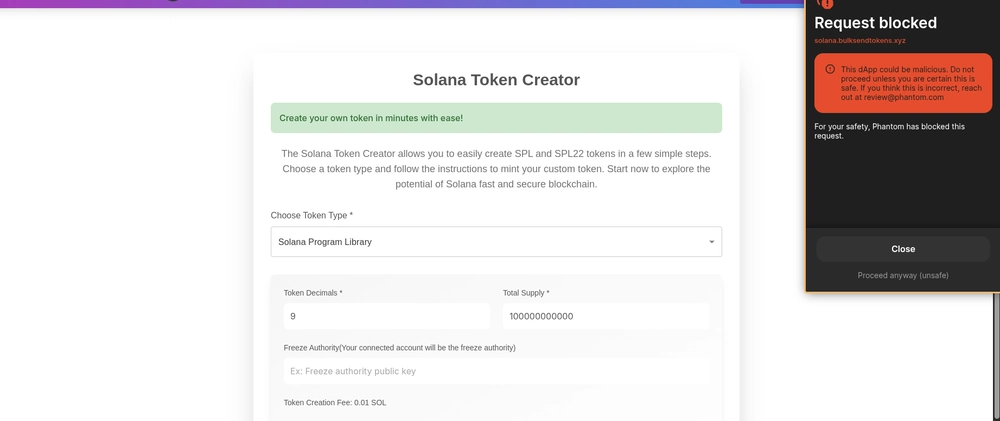
Non-custodial browser extension wallet · Seamless integration with Solana dApps · Supports token swaps and NFT management
Phantom wallet is a leading non-custodial browser extension that facilitates easy and secure interaction with the Solana DeFi ecosystem.
As an Amazon Associate I earn from qualifying purchases. Prices may vary.
Raydium and Orca
Raydium and Orca are the main exchanges on Solana. Raydium was here first and has more total value locked and more pools. It uses a Proactive Market Maker model to keep slippage low.
Orca, on the other hand, has gained popularity for its user-friendly interface and concentrated liquidity pools. Concentrated liquidity allows liquidity providers to specify price ranges where they want to provide liquidity, increasing capital efficiency and potential yields. Both platforms have implemented features to mitigate impermanent loss, such as range orders and dynamic fees, but it remains a key risk for liquidity providers.
Since 2024, both platforms have significantly expanded their yield farming programs, introducing new pools and incentives to attract liquidity. Raydium has focused on integrating with more projects in the Solana ecosystem, while Orca has doubled down on its concentrated liquidity model, offering more granular control to liquidity providers. The competition between the two has ultimately benefited users through lower slippage and higher yields.
Drift: options and yield
Drift Protocol is a decentralized exchange specializing in perpetual contracts, offering a unique avenue for earning yield on Solana. Users can earn yield by providing liquidity to options pools, essentially acting as option sellers. This involves receiving premiums in exchange for taking on the risk of the option being exercised.
Alternatively, users can actively trade options, speculating on price movements and profiting from correctly predicting the direction of the market. However, options trading is inherently risky and requires a strong understanding of options theory and risk management. Drift Protocol provides tools for managing risk, such as margin requirements and liquidation mechanisms, but losses can still be substantial.
While Drift Protocol offers potentially high yields, it’s generally not suitable for beginners. The complexity of options trading and the potential for significant losses require a high level of financial literacy and risk tolerance. It's geared towards more sophisticated DeFi users.
MarginFi vs Solend
MarginFi and Solend are two of the leading lending protocols on Solana, enabling users to lend and borrow crypto assets. Both platforms operate on a collateralized lending model, requiring borrowers to provide collateral exceeding the value of their loan to mitigate risk. Solend has been around for longer and has a larger TVL but MarginFi has been innovating with uncollateralized lending.
Solend offers a wider range of supported assets and features, including flash loans and variable interest rates. MarginFi focuses on streamlined user experience and efficient collateral utilization. Collateralization ratios vary depending on the asset, but generally range from 150-200%. Liquidation mechanisms are in place to automatically sell collateral if a borrower’s position becomes undercollateralized.
A key risk with lending protocols is liquidation. If the value of a borrower’s collateral falls below the required threshold, their position will be liquidated, resulting in a loss of collateral. Both MarginFi and Solend employ sophisticated liquidation mechanisms to minimize slippage and ensure fair liquidations. Understanding these mechanisms and managing your collateralization ratio is crucial for mitigating risk.
Jet Protocol: Fixed-Rate Lending
Jet Protocol distinguishes itself with its fixed-rate lending model, offering borrowers and lenders the certainty of predetermined interest rates. This contrasts with the variable rates offered by most other lending protocols, which can fluctuate based on market demand. Fixed-rate lending provides predictability but requires Jet Protocol to effectively manage interest rate risk.
The benefit of fixed-rate lending for borrowers is predictable costs, allowing for better financial planning. For lenders, it guarantees a specific return on their deposited assets. However, Jet Protocol addresses the risk of interest rate fluctuations by utilizing a dynamic interest rate model and hedging strategies.
The platform’s ability to accurately anticipate and manage interest rate movements is critical to its success. While fixed-rate lending offers advantages, it also comes with the risk of missing out on potential gains if market rates rise significantly. Jet Protocol’s approach aims to balance predictability with competitive returns.
Scoping Out Emerging Platforms
Beyond the established players, several newer Solana DeFi platforms show promise, though they come with increased risk. Nirvana Finance offers stablecoin-based yield opportunities, but its reliance on algorithmic stablecoins introduces inherent volatility. Mango Markets provides margin trading and lending, but has been subject to security incidents in the past.
Raydius V2 is a new iteration of Raydium that features more efficient capital utilization. These platforms are often at the forefront of innovation, offering higher potential yields but also carrying a greater risk of smart contract vulnerabilities or project failure. Tensor Finance is a platform focused on professional trading tools and yield strategies.
It’s essential to approach these emerging platforms with caution. Thoroughly research the project’s team, smart contract audits, and TVL before investing. Only allocate capital that you can afford to lose. These are higher-risk, higher-reward opportunities that require a deep understanding of the underlying technology and market dynamics.
No comments yet. Be the first to share your thoughts!