
Solana Wallets: A 2026 Landscape
The Solana blockchain has experienced significant growth over the past few years, becoming a major player in the cryptocurrency space. This growth has been fueled by a thriving DeFi ecosystem, a rapidly expanding NFT market, and a steadily increasing user base. As of late 2026, over 80 million unique addresses have interacted with Solana smart contracts, according to Solana Foundation data. This increased activity necessitates a greater focus on secure and feature-rich wallets.
The need for well-designed wallets isn’t abstract; it’s a direct consequence of the increasing value held on the Solana network. Recent security incidents, including several phishing attacks targeting wallet users and exploits of vulnerable smart contracts, have underscored the importance of choosing a wallet with robust security features. A compromised wallet can lead to the irreversible loss of funds, and the responsibility for protecting those funds ultimately rests with the user.
The Solana wallet landscape is diverse, with options ranging from simple browser extensions to sophisticated mobile apps and hardware wallet integrations. Selecting the right wallet depends on your individual needs and technical expertise. Factors to consider include security, ease of use, supported features, and the level of control you desire over your private keys. This guide aims to provide a comprehensive overview of the best Solana wallets available in 2026, helping you make an informed decision.
The pace of innovation in the Solana ecosystem is rapid. New wallets and features are constantly being developed, and existing wallets are regularly updated to improve security and functionality. Staying informed about the latest developments is essential for protecting your assets and maximizing your Solana experience.
Custodial vs. Non-Custodial: What’s the Difference?
The fundamental distinction between Solana wallets lies in whether they are custodial or non-custodial. Custodial wallets, like those offered by centralized exchanges, hold your private keys on your behalf. This offers convenience, as you don’t need to worry about managing your keys, but it also means you don’t have full control over your funds. You are trusting the custodian to securely store and protect your assets.
Non-custodial wallets, on the other hand, give you complete control over your private keys. You are responsible for securely storing your seed phrase – a 12 or 24-word phrase that allows you to recover your wallet if you lose access to your device. While this offers greater security and control, it also comes with increased responsibility. Losing your seed phrase means losing access to your funds – permanently.
I learned this lesson the hard way a few years ago when I misplaced the seed phrase for a small Solana wallet I used for testing purposes. There was no recovery option, and I lost the SOL that was in the wallet. It was a painful, but valuable, reminder of the importance of secure seed phrase management. The trade-off is real: convenience versus control.
Custodial wallets are generally easier to use, particularly for beginners. They often offer features like password recovery and customer support. However, they are also more vulnerable to hacks and regulatory issues. Non-custodial wallets offer greater security and privacy, but they require a higher level of technical understanding and responsibility. The choice depends on your risk tolerance and technical proficiency.
- Custodial Wallets: Your private keys are held by a third party.
- Non-Custodial Wallets: You have complete control over your private keys.
- Custodial Wallets: Convenient and easy to use.
- Non-Custodial Wallets: Require more technical knowledge and responsibility.
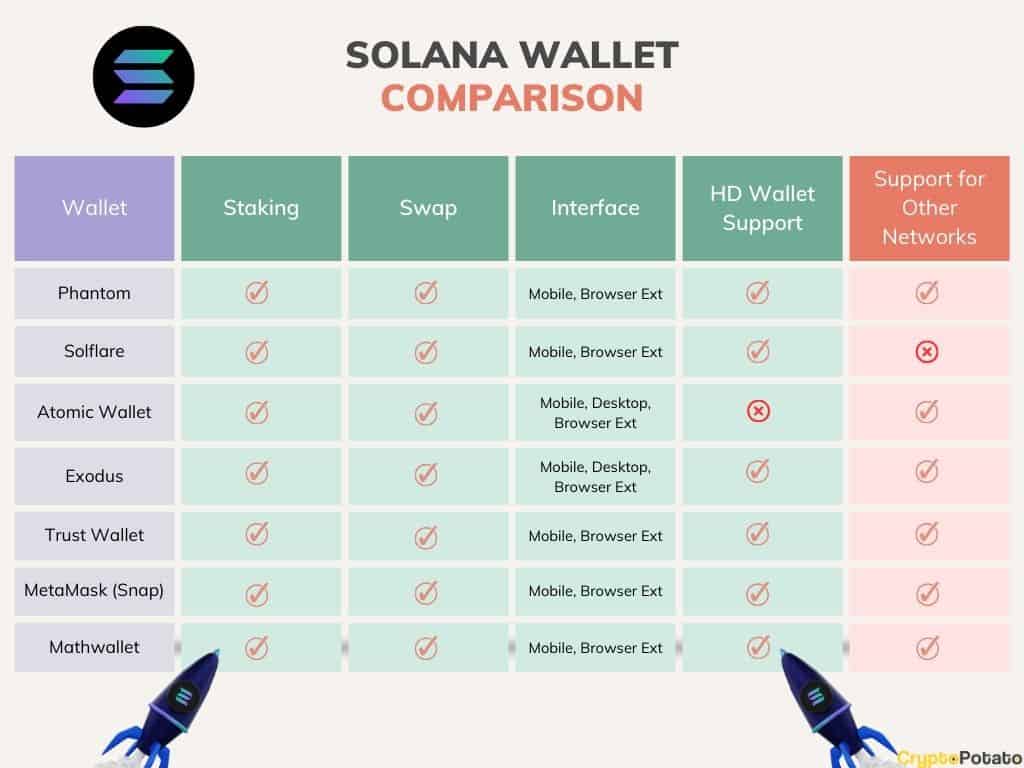
Solana Wallet Comparison: Custodial vs. Non-Custodial (2026)
| Wallet Type | Security | Control | Ease of Use | Recovery Options |
|---|---|---|---|---|
| Custodial | Medium | Low | High | Medium - Typically reliant on provider's processes |
| Non-Custodial | High | High | Medium | High - Seed phrase based, user responsibility |
| Phantom (Non-Custodial) | High | High | High | High - Seed phrase and optional social recovery |
| Solflare (Non-Custodial) | High | High | Medium | High - Seed phrase based |
| Ledger (Hardware - Non-Custodial) | Very High | High | Medium | High - Seed phrase + Hardware device |
| Trust Wallet (Custodial/Non-Custodial) | Medium/High | Low/High | High | Medium - Dependent on chosen setup (Custodial relies on Trust Wallet, Non-Custodial on seed phrase) |
Illustrative comparison based on the article research brief. Verify current pricing, limits, and product details in the official docs before relying on it.
Top Solana Wallets: Our 2026 Picks
As of late 2026, several Solana wallets stand out for their security, features, and user experience. Here’s a roundup of the best options currently available. We’ve focused on wallets with a proven track record and a commitment to security.
Phantom remains a popular choice, known for its sleek interface and user-friendly design. It supports Solana NFTs, DeFi, and staking, and offers integrated swap functionality. Phantom also supports Ledger and Trezor hardware wallets for enhanced security. It's a good all-rounder.
Solflare is another highly-regarded wallet, praised for its robust security features and support for multiple Solana networks. It offers a similar feature set to Phantom, including NFT support and DeFi integration, but with a slightly more technical focus. Solflare also allows users to create and manage multiple Solana accounts within a single wallet.
Backpack has gained traction for its focus on account abstraction and its advanced trading features. It goes beyond a simple wallet, aiming to be a comprehensive platform for managing your Solana assets. Backpack’s unique features include a built-in order book and advanced charting tools. It is geared towards more experienced traders.
Harp Wallet offers a unique approach to security with its multi-party computation (MPC) technology, eliminating the need for a seed phrase. It’s designed for ease of use and offers strong security without the risk of seed phrase loss. However, MPC wallets are a relatively new technology and may not be as widely vetted as traditional non-custodial wallets.
Sollet is a lightweight, browser-based wallet that’s ideal for quick transactions and interacting with Solana dApps. It’s less feature-rich than Phantom or Solflare, but it’s a convenient option for users who don’t want to install a full wallet application.
Ledger Live (with Solana app) provides the highest level of security by storing your private keys on a hardware device. It’s a great option for users who are serious about protecting their Solana assets, but it requires purchasing a Ledger hardware wallet. The cost is a barrier for some, but the security is unparalleled.
Trezor Suite (with Solana support) offers a similar level of security to Ledger, using a hardware wallet to store your private keys. Trezor provides a more open-source approach compared to Ledger. Like Ledger, it requires an initial hardware investment.
- Phantom: User-friendly, feature-rich, supports hardware wallets.
- Solflare: Robust security, multiple network support.
- Backpack: Advanced trading features, account abstraction.
- Harp Wallet: Seed phrase-less security with MPC.
- Sollet: Lightweight browser-based wallet.
- Ledger Live: Hardware wallet integration, maximum security.
- Trezor Suite: Open-source hardware wallet integration.
Featured Products
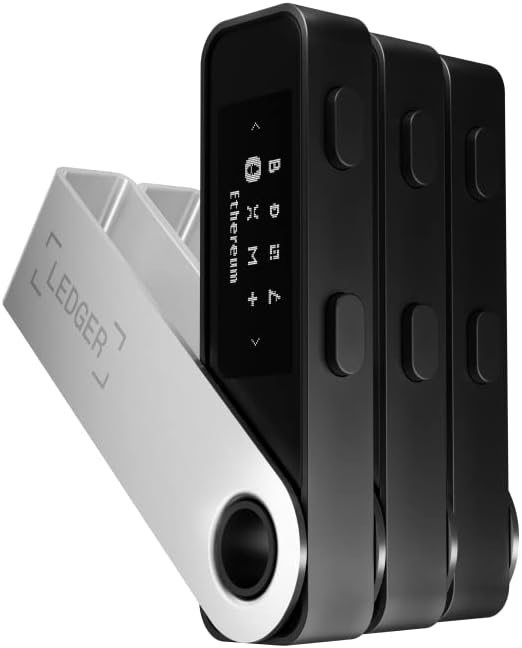
Secure Element chip for storing private keys offline · Supports over 5,500 cryptocurrencies including SOL · Large display for verifying transactions
The Ledger Nano S Plus offers a secure and user-friendly entry point for safeguarding Solana assets with robust offline storage.
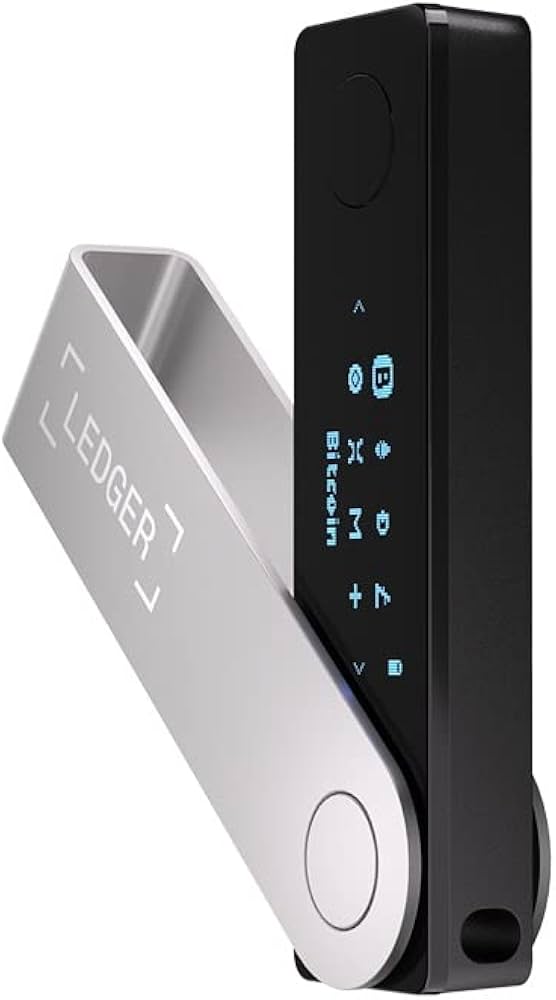
Bluetooth connectivity for mobile management · Secure Element chip for offline private key storage · Can manage up to 100 applications on the device
For users requiring mobile accessibility and advanced management capabilities for their Solana holdings, the Ledger Nano X is an optimal choice.
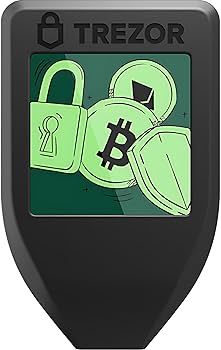
Color touchscreen interface for intuitive operation · Full-disk encryption for enhanced security · Open-source firmware for transparency
The Trezor Model T provides a premium user experience with its touchscreen and robust security features, suitable for managing diverse Solana-based assets.
Certified Secure Element chip · Support for a wide array of digital assets · Ergonomic design with a clear display
This wallet is a reliable and cost-effective solution for securing Solana and other cryptocurrencies offline.
Advanced security with a Secure Element · Wireless Bluetooth connectivity · Capacity for numerous crypto applications
The Ledger Nano X is recommended for its blend of advanced security, extensive compatibility, and convenient wireless management of Solana.
As an Amazon Associate I earn from qualifying purchases. Prices may vary.
Security Features: A Deep Dive
Security is paramount when choosing a Solana wallet. Several key features contribute to a wallet’s overall security posture. Seed phrase management is arguably the most important aspect. Always store your seed phrase offline, in a secure location, and never share it with anyone. Consider using a metal seed phrase backup for added protection against physical damage.
Multi-signature (multi-sig) support is another important security feature. Multi-sig wallets require multiple approvals for transactions, making it much more difficult for an attacker to steal your funds. This is particularly useful for managing large amounts of Solana or for shared accounts. Not all wallets offer multi-sig support, but it’s becoming increasingly common.
Biometric authentication, such as fingerprint or facial recognition, adds an extra layer of security to your wallet. This prevents unauthorized access to your wallet, even if your device is compromised. Most mobile wallets offer biometric authentication as an option.
Hardware wallet integration is the gold standard for Solana wallet security. By storing your private keys on a hardware device, you isolate them from your computer or mobile device, making it virtually impossible for hackers to steal them. Ledger and Trezor are the leading hardware wallet providers.
Using strong, unique passwords and enabling two-factor authentication (2FA) are also essential security practices. 2FA adds an extra layer of protection by requiring a code from your phone or email in addition to your password. Always be wary of phishing attacks and never click on suspicious links.
- Seed Phrase Management: Securely store your seed phrase offline.
- Multi-Signature Support: Requires multiple approvals for transactions.
- Biometric Authentication: Adds an extra layer of security.
- Hardware Wallet Integration: Stores private keys on a secure device.
- Strong Passwords & 2FA: Protect your account from unauthorized access.
Wallet Features: Beyond Basic Transfers
Beyond simply sending and receiving SOL, Solana wallets offer a range of additional features. Built-in swap functionality allows you to exchange SOL for other tokens directly within the wallet, eliminating the need to use a centralized exchange. The fees and slippage can vary, so it’s important to compare prices before making a trade.
NFT support is a must-have for many Solana users. Most wallets allow you to view, send, and receive Solana NFTs, and some even offer advanced NFT management features, such as rarity rankings and floor price tracking. Phantom and Solflare are particularly strong in this area.
Staking options allow you to earn rewards by participating in the Solana network’s consensus mechanism. Some wallets provide a simple interface for staking SOL, while others require you to delegate your stake to a validator. The rewards rate varies depending on the validator and the network conditions.
Integration with DeFi protocols is becoming increasingly common. Some wallets allow you to directly interact with DeFi platforms, such as Raydium and Orca, from within the wallet interface. This simplifies the process of participating in DeFi activities, such as lending, borrowing, and yield farming.
The best wallet for you will depend on your specific needs and preferences. If you’re primarily interested in NFTs, choose a wallet with strong NFT support. If you’re a DeFi enthusiast, look for a wallet with seamless DeFi integration. If security is your top priority, consider using a hardware wallet.
Backpack & Phantom: A Closer Look
Backpack and Phantom are two of the most popular Solana wallets, each offering a unique set of features and benefits. Phantom has long been the go-to wallet for many Solana users, praised for its intuitive interface and ease of use. It's a great choice for beginners and experienced users alike.
Backpack, on the other hand, is a more recent entrant to the Solana wallet space, but it has quickly gained popularity thanks to its focus on account abstraction and advanced trading features. Backpack aims to be more than just a wallet – it’s a comprehensive platform for managing your Solana assets. It’s particularly appealing to traders who want more control over their transactions.
In terms of security, both wallets offer robust features, including seed phrase management and hardware wallet integration. Backpack's account abstraction features allow for more flexible security arrangements, potentially enabling features like social recovery. Phantom is well-established and has a strong security track record.
Phantom excels at simplicity and user experience. It’s easy to set up and use, and it provides a clean and intuitive interface. Backpack is more complex, but it offers a wider range of features and customization options. The choice between the two depends on your technical expertise and your desired level of control.
- Phantom: Simplicity, ease of use, strong NFT support.
- Backpack: Account abstraction, advanced trading features, comprehensive platform.
Emerging Trends in Solana Wallets
The Solana wallet landscape is constantly evolving, with several emerging trends poised to shape the future of Solana wallets. Account abstraction is one of the most promising developments. Account abstraction allows for more flexible and customizable wallet functionality, potentially enabling features like social recovery and gasless transactions.
Social recovery is a mechanism that allows you to recover your wallet using a trusted network of friends or family, rather than relying solely on your seed phrase. This can significantly reduce the risk of losing access to your funds. However, it also introduces new security considerations, as you need to trust your recovery guardians.
Improved security features, such as multi-party computation (MPC) and threshold signature schemes, are also gaining traction. These technologies offer enhanced security without requiring you to manage a seed phrase. They are still relatively new, but they have the potential to revolutionize Solana wallet security.
I’m not sure about the exact timeline for widespread adoption of these trends, but they are definitely worth watching. The Solana community is actively working on developing and implementing these features, and we can expect to see them become more prevalent in the coming years. The future of Solana wallets is likely to be more secure, more flexible, and more user-friendly.
- Account Abstraction: More flexible and customizable wallet functionality.
- Social Recovery: Recover your wallet using a trusted network.
- Advanced Security Technologies: MPC and threshold signature schemes.
No comments yet. Be the first to share your thoughts!