
Top Solana wallet picks for 2026
Choosing the right Solana wallet depends on how you plan to use your assets. The market splits into three clear categories: hot wallets for daily trading, software wallets for casual holding, and hardware wallets for long-term security. Each type serves a different risk profile and user need.
Phantom: The standard for daily use
Phantom is the most widely used Solana wallet, serving over 15 million users. It offers a seamless interface for interacting with Solana dApps, NFTs, and DeFi protocols directly from the browser or mobile app. Its ease of use makes it the default choice for active traders and newcomers alike.
Solflare: The secure software alternative
Solflare provides a robust software wallet experience with a strong focus on security features. It supports staking directly within the app and offers a clean desktop and mobile interface. For users who prefer a dedicated Solana-focused wallet over a multi-chain option, Solflare is a reliable, open-source choice.
Ledger: Hardware security for large holdings
For significant holdings, a hardware wallet like the Ledger Nano X is the safest option. It keeps your private keys offline, protecting them from online threats while still allowing you to interact with Solana applications. This physical device is essential for anyone prioritizing maximum security over convenience.


As an Amazon Associate, we may earn from qualifying purchases.
Phantom, Solflare, and Ledger: Feature Comparison
Choosing a Solana wallet depends on how you plan to use it. Whether you need a quick mobile interface for daily swaps, advanced staking controls, or offline hardware security, each option offers distinct technical capabilities.
The table below breaks down the core differences between Phantom, Solflare, and Ledger on key metrics. This comparison helps you identify which wallet aligns with your specific security and functionality needs.
| Feature | Phantom | Solflare | Ledger |
|---|---|---|---|
| Platform | Web, Mobile (iOS/Android) | Web, Mobile (iOS/Android) | Hardware Device + Ledger Live |
| Staking Support | Yes (Solana & others) | Yes (Solana & others) | Yes (via Ledger Live) |
| Multi-Sig | Yes | Yes | Yes (via third-party integrations) |
| Security Type | Software (Non-custodial) | Software (Non-custodial) | Hardware (Cold Storage) |
| Token Support | Solana Ecosystem + Bitcoin | Solana Ecosystem + Bitcoin | Solana + 5,500+ Cryptos |
Phantom and Solflare are both software-based, non-custodial wallets that live in your browser or on your phone. They offer similar core features like native staking and multi-signature support, making them ideal for active traders and DeFi users who need quick access to their assets. The main difference lies in their user interfaces and additional ecosystem integrations.
Ledger, on the other hand, is a hardware wallet. It stores your private keys offline on a physical device, providing the highest level of security against online threats. While it requires a companion app (Ledger Live) to interact with Solana, it is the recommended choice for long-term holders who prioritize asset protection over daily convenience. For more details on Solana's security features, you can visit Solana.com.
Why Phantom Leads the Market
Phantom has established itself as the default gateway for Solana, currently serving over 15 million users [1]. This dominance stems from a deliberate focus on usability that lowers the barrier to entry for newcomers while retaining features power users demand. Unlike hardware-first approaches, Phantom prioritizes a fluid software experience that integrates seamlessly with the Solana ecosystem.
Interface and Daily Usability
The wallet’s interface strikes a balance between simplicity and depth. New users can buy, swap, and stake SOL with a few taps, while advanced users can access detailed transaction logs and network diagnostics. The design avoids clutter, presenting essential information without overwhelming the reader with technical jargon. This clarity is critical in a high-stakes environment where a single misstep can result in permanent loss of funds.
NFT and DeFi Integration
Phantom treats non-fungible tokens (NFTs) as first-class citizens rather than an afterthought. The built-in gallery allows users to view, manage, and transfer their digital collectibles with ease. Direct integration with major decentralized exchanges and lending protocols means users can interact with Solana DeFi without leaving the wallet. This all-in-one functionality reduces the friction of switching between multiple applications, keeping assets and interactions contained within a secure, familiar environment.

Security and Trust
Security remains the foundation of Phantom’s value proposition. The wallet employs industry-standard encryption for private keys and offers robust phishing protection features. While software wallets inherently carry more risk than hardware solutions, Phantom’s transparent development history and active community support provide a layer of trust. Users should always verify official links and enable additional security measures like transaction confirmation prompts to maintain full control over their assets.
Solflare for granular staking control
Solflare stands out as the preferred choice for users who want precise, desktop-based management of their staking activities. Unlike wallets that automate rewards into a single pool, Solflare allows you to delegate to specific validators and monitor individual performance metrics directly from the desktop application. This level of granularity is essential for those prioritizing control over convenience.
The desktop interface provides a comprehensive dashboard for tracking validator uptime, commission rates, and historical rewards. You can switch validators without moving your funds, a process that is often more streamlined on desktop than on mobile. This feature supports active portfolio management, allowing you to respond quickly to changes in validator performance or network conditions.
Security remains a priority with Solflare’s open-source codebase, which undergoes regular audits. The desktop app integrates seamlessly with hardware wallets like Ledger, enabling you to sign transactions offline while using the desktop interface for viewing and management. This hybrid approach offers the best of both worlds: the convenience of a software interface with the security of cold storage.
For advanced users, Solflare also supports direct interaction with Solana-based decentralized applications (dApps) and DeFi protocols. You can stake tokens directly within the wallet while interacting with other services, reducing the need to bridge assets between different platforms. This integration simplifies the user experience while maintaining the high level of control that serious stakers require.
Hardware wallets for maximum security
When you are holding significant value in Solana, software wallets are no longer enough. Hardware wallets like Ledger store your private keys on a physical device that never connects to the internet. This air-gapped approach means that even if your computer is infected with malware, your funds remain safe from remote theft.
For long-term holders, the strategy is often to combine a hardware wallet with a software interface. You might use a Ledger device to store the bulk of your SOL, while keeping a small amount in Phantom or Solflare for daily transactions. This hybrid approach gives you the best of both worlds: maximum security for your savings and convenience for everyday use.
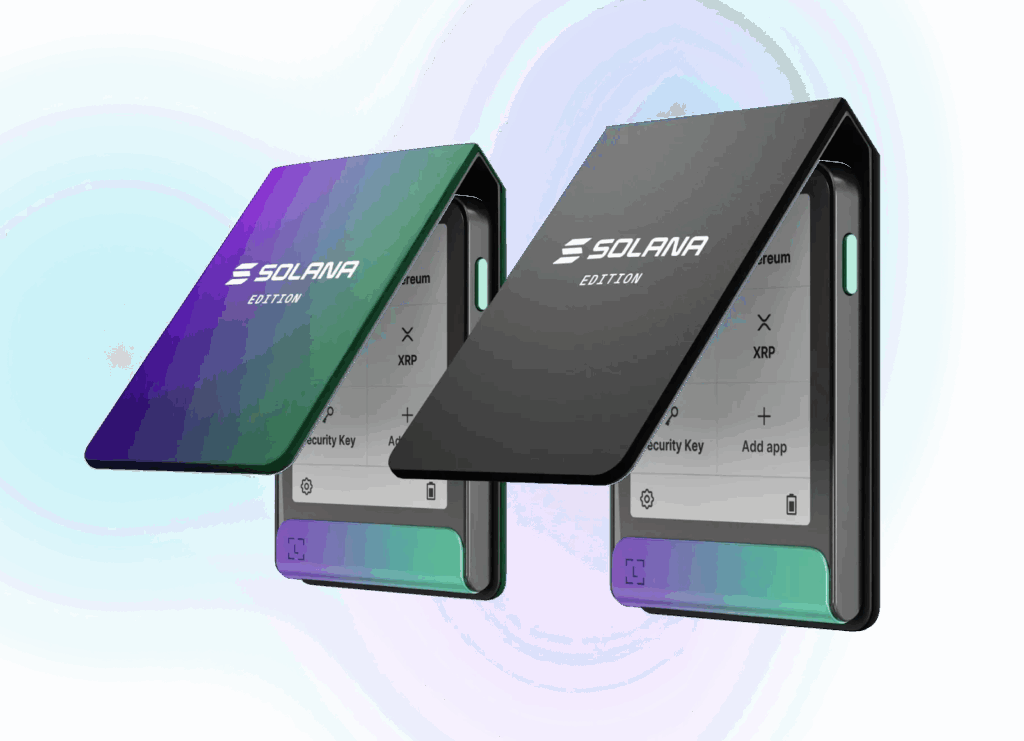
Verify the physical integrity of the device upon arrival. Official hardware wallets come in sealed packaging with tamper-evident seals. If the seal is broken or the device feels used, do not set it up. Instead, contact the manufacturer immediately for a replacement. This simple step is your first line of defense against supply-chain attacks.
How to choose the right Solana wallet
Selecting a Solana wallet depends less on features and more on your risk tolerance and how often you interact with the network. A wallet is not just a storage device; it is your primary interface to the Solana ecosystem. Your choice should align with whether you are trading frequently or holding assets long-term.
If you hold significant value, a hardware wallet like Ledger provides offline key storage. This isolates your private keys from internet-connected devices, reducing exposure to phishing and malware. For smaller amounts used in daily transactions, a software wallet like Phantom offers sufficient security with greater convenience.
High-frequency traders need speed and low friction. Software wallets connect instantly to decentralized exchanges (DEXs) and allow quick signing of transactions. If you rarely trade, the slight delay in connecting a hardware device is a worthwhile trade-off for enhanced security.
Always download wallets from official channels. Solana’s official wallet directory (solana.com/wallets) lists verified options. Avoid third-party app stores or unverified links to prevent downloading malicious clones designed to steal your seed phrase.
No comments yet. Be the first to share your thoughts!