
Solana DeFi: The 2026 Landscape
Solana is a major player in decentralized finance (DeFi). The ecosystem has grown substantially, driven by its high throughput and low transaction fees, which address Ethereum’s limitations. Total Value Locked (TVL) trends upwards as new projects launch and existing ones mature, fueled by interest in yield farming, staking, and decentralized exchanges.
Solana’s Proof-of-History consensus mechanism enables fast transaction speeds and consistently lower fees than competing blockchains, making it attractive for high-frequency trading and applications needing quick settlement. However, occasional outages have raised concerns about network stability, issues the community is addressing through development and upgrades. These outages haven’t shaken confidence in Solana DeFi’s long-term potential.
Innovation in 2026 will focus on decentralized perpetuals, lending protocols, and real-world asset (RWA) tokenization. Firedancer, a parallelized transaction processing engine, promises to improve network performance and scalability. Competition is fierce, with new protocols emerging and established ones vying for market share. Navigating this space requires careful research and understanding of the risks.
Solana DeFi growth is intertwined with broader crypto trends, including institutional investor adoption and demand for decentralized financial services. Solana is well-positioned to remain a major force in DeFi. Addressing network stability concerns and fostering a secure developer community will be key.
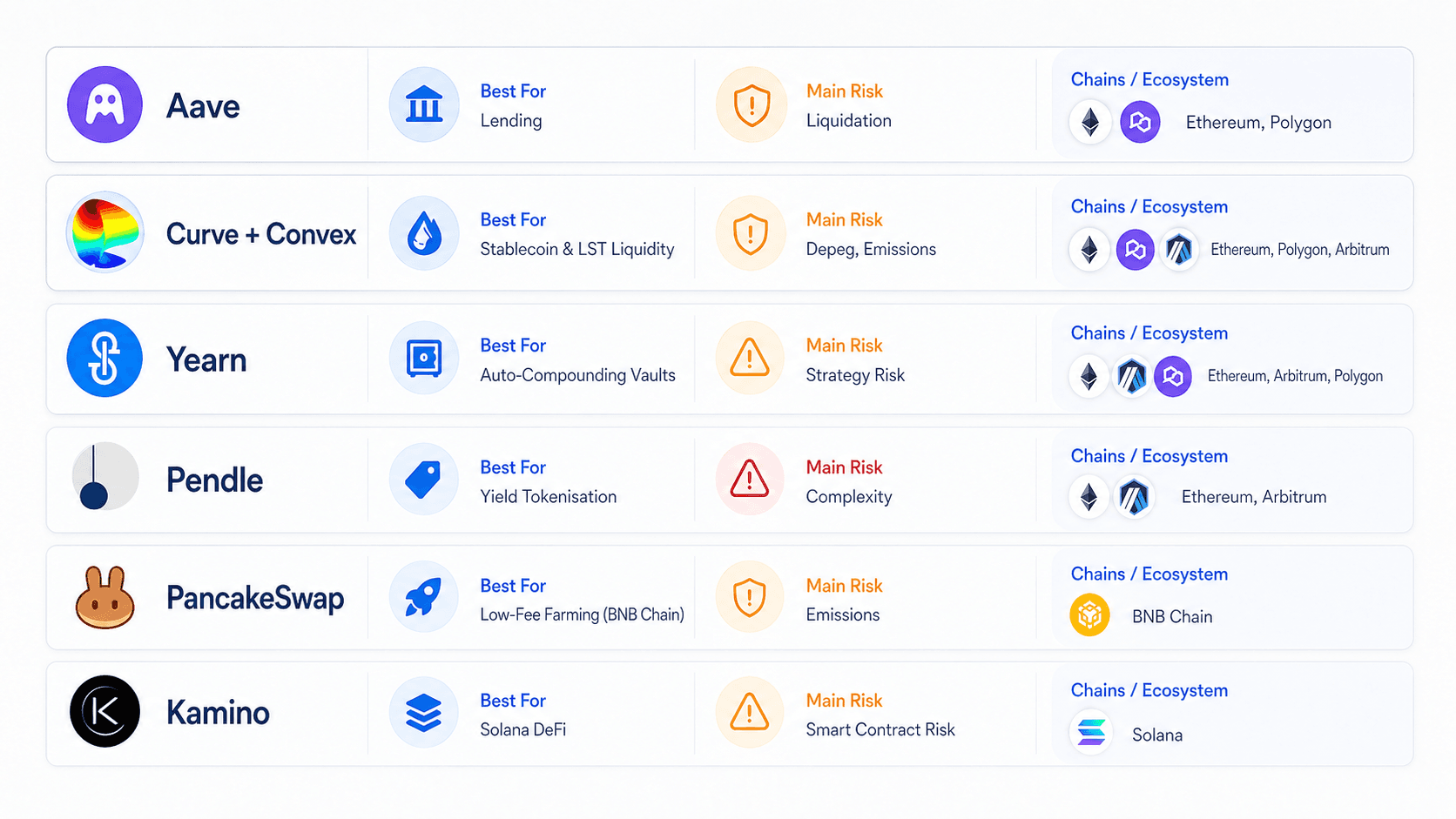
Top 10 Solana DeFi Platforms (2026)
Ranking Solana DeFi platforms changes with market conditions and protocol development. As of early 2026, these ten platforms lead in TVL, user activity, and innovation. APY figures are approximate and subject to market volatility and liquidity.
1. Raydium (RAY): Raydium is a cornerstone of Solana DeFi, acting as an automated market maker (AMM) and liquidity provider for Serum. Users can stake RAY and join liquidity pools, with APYs from 8-15% depending on the pool. Risks include impermanent loss and smart contract vulnerabilities.
2. Orca (ORCA): Orca is popular for its user-friendly interface and concentrated liquidity pools. ORCA farming offers APYs between 6-12%, focusing on stablecoin pairs to mitigate impermanent loss. The platform has a strong reputation for security and community support.
3. Marinade Finance (mSOL): Marinade Finance is a leading liquid staking protocol, letting users stake SOL and receive mSOL. mSOL can be used in other DeFi applications for additional yield. Staking rewards average 7-10% annually. Risks include smart contract security and slashing events.
4. Solend (SLND): Solend is a decentralized lending protocol for depositing and borrowing Solana tokens. SLND staking and lending rewards offer APYs of 5-8%, depending on market demand. The platform’s risk management system is robust, but liquidation risks remain for borrowers.
5. Drift Protocol: Drift is a decentralized perpetuals exchange with high leverage and many trading pairs. It has grown significantly in 2026, attracting traders with competitive fees and features. Rewards for liquidity provision and trading can reach 10-20%, but carry substantial risk.
6. Tensor: Tensor is a DeFi platform for trading perpetual futures, gaining traction with experienced traders for its advanced order types and interface. APYs for liquidity provision are competitive, around 8-14%, but the platform is complex and carries inherent risks.
7. Jito: Jito offers staking and yield farming, focusing on maximizing returns through MEV (Miner Extractable Value) extraction. Staking rewards are typically 8-12%, but the platform’s complexity requires understanding Solana’s mechanics.
8. Kamino Finance: Kamino Finance provides leveraged yield farming strategies, letting users amplify returns by borrowing against deposits. APYs can exceed 20%, but the risk of liquidation increases significantly.
9. Francium: Francium focuses on lending and leveraged farming, letting users borrow assets for high-yield strategies. APYs range from 7-15%, but the platform carries significant risk due to leverage.
10. Cypher Protocol: Cypher Protocol is a lending and borrowing platform focused on capital efficiency and risk management. It offers competitive APYs, typically 6-10%, with an emphasis on security.
Top 10 Solana DeFi Platforms - 2026 Comparison
| Platform | Total Value Locked (TVL) | APY Range (Staking/Yield Farming) | Audit Status | Risk Score |
|---|---|---|---|---|
| Raydium | Significant, consistently among the top Solana DeFi projects | Variable, 5% - 30%+ depending on pool; RAY staking typically lower | Multiple, including CertiK and PeckShield | Medium |
| Orca | Growing, competitive with Raydium | 5% - 25%+ depending on pool; ORCA farming rewards vary | Audited by Neodyme and Trail of Bits | Medium |
| Marinade Finance | High, leading liquid staking protocol | 6% - 10% (mSOL staking rewards) | Audited by Trail of Bits and Quantstamp | Low to Medium |
| Tulip Protocol | Moderate, focuses on leveraged positions | Highly variable, 10% - 50%+ (leveraged farming, higher risk) | Audited by CertiK | High |
| Saber | Substantial, specializing in stablecoin swaps | 2% - 10% (stablecoin yields, lower volatility) | Multiple audits, including Quantstamp | Low |
| Quarry Protocol | Developing, gauge-based rewards system | Variable, dependent on gauge weight and token pair | Recent audits by independent firms | Medium to High |
| Francium | Moderate, lending and leveraged farming | Variable, 8% - 40%+ (leveraged farming, significant risk) | Audited by CertiK | High |
| Solend | Moderate, lending and borrowing platform | 4% - 15% (SLND staking and lending rewards) | Audited by Neodyme | Medium |
Illustrative comparison based on the article research brief. Verify current pricing, limits, and product details in the official docs before relying on it.
Yield Farming Strategies: Maximizing Returns
Yield farming means providing liquidity to decentralized exchanges or lending protocols for rewards. Strategies on Solana have different risk-reward profiles. Liquidity Providing (LP) is common: deposit two tokens into a pool and earn fees from trades. This carries the risk of impermanent loss, where deposited assets can decrease in value compared to holding them.
Single-Sided Staking means staking a single token, usually a stablecoin, for rewards. This avoids impermanent loss but offers lower APYs. Leveraged Yield Farming lets you borrow assets to increase your position size, amplifying potential returns and losses. This strategy is highly risky and needs careful monitoring to avoid liquidation.
Higher APY usually means higher risk. Protocols with exceptionally high yields may be unsustainable or have vulnerabilities. Stablecoins help mitigate impermanent loss, as their value is pegged to assets like the US dollar. Using stablecoin pairs in liquidity pools reduces the impact of price fluctuations. Consider your risk tolerance and invest only what you can afford to lose.
Before yield farming, research the protocol, understand the risks, and diversify your portfolio. Don’t put all your eggs in one basket. Consider security audits and the team’s reputation. Yield farming is not risk-free.
Staking Solana: Beyond Just SOL
Staking SOL directly on the Solana network is straightforward. Liquid staking protocols like Marinade Finance and Jito offer an alternative. Direct SOL staking locks up your SOL for a period, earning rewards directly from the network, typically 5-7% annually.
undefined from providing liquidity, adds another layer to the staking process.
Solana’s Proof-of-Stake consensus mechanism relies on validators to process transactions and secure the network. Staking rewards are distributed to validators and delegators (those who delegate their SOL to validators). The ongoing development of Firedancer is expected to improve network performance and potentially increase staking rewards by reducing the resources required for validation. However, the exact impact on staking rewards remains to be seen.
The choice between direct staking, liquid staking, and staking LP tokens depends on your individual needs and risk tolerance. Liquid staking offers the most flexibility, while direct staking is the simplest option. Staking LP tokens can maximize returns but also carries the risk of impermanent loss.
Security Considerations: Staying Safe in DeFi
Security is paramount in the world of Solana DeFi. Smart contract vulnerabilities, rug pulls, and phishing scams are all potential threats. Smart contract risk refers to the possibility of bugs or exploits in the code that governs a DeFi protocol. Rug pulls occur when a project team abandons a project and absconds with investors’ funds. Phishing scams involve tricking users into revealing their private keys or other sensitive information.
To stay safe, always use a hardware wallet to store your private keys offline. Verify contract addresses before interacting with any protocol. Diversify your portfolio to reduce your exposure to any single project. Be wary of unsolicited messages or offers. DYOR (Do Your Own Research) is crucial – thoroughly investigate any project before investing.
Look for protocols that have undergone multiple security audits by reputable firms. Check the protocol’s code on platforms like GitHub. Pay attention to the project’s community and governance structure. A strong and active community can often identify and address potential security issues more quickly. Use reputable DeFi aggregators to track your portfolio and monitor for suspicious activity.
Remember that DeFi is a rapidly evolving space, and new security threats emerge constantly. Stay informed about the latest scams and best practices. Never share your private keys with anyone. If something seems too good to be true, it probably is.
- Use a hardware wallet.
- Verify contract addresses.
- Diversify your portfolio.
- Do your own research (DYOR).
Emerging Trends: What's Next for Solana DeFi?
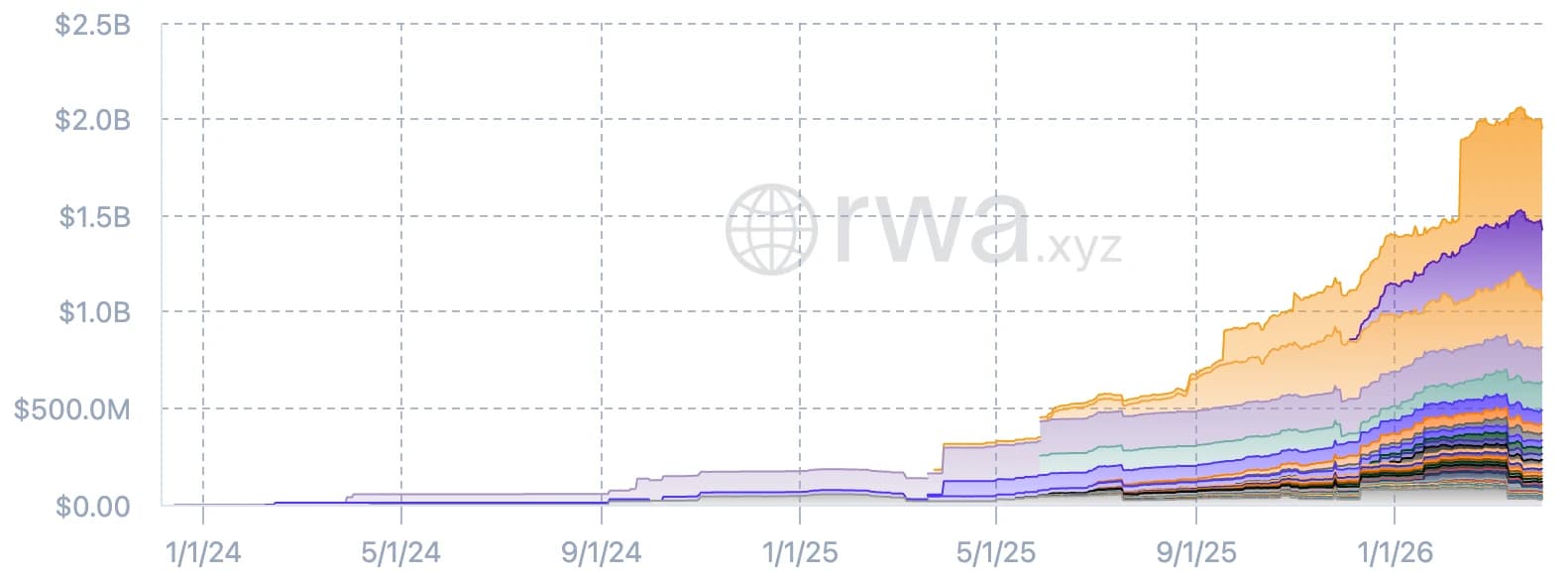
Several emerging trends are poised to shape the future of Solana DeFi. Real-World Asset (RWA) tokenization involves bringing traditional assets, such as stocks, bonds, and real estate, onto the blockchain. Solana’s speed and low cost make it an ideal platform for RWA tokenization. Decentralized Insurance protocols offer coverage against smart contract vulnerabilities and other risks, providing a safety net for DeFi users.
Cross-chain interoperability is another key trend, enabling seamless transfer of assets and data between different blockchains. This could unlock new opportunities for collaboration and innovation within the Solana ecosystem. The development of layer-2 scaling solutions on Solana could further improve scalability and reduce transaction costs.
These trends have the potential to significantly expand the reach and utility of Solana DeFi. RWA tokenization could bring new capital into the ecosystem, while decentralized insurance could increase user confidence. Cross-chain interoperability could foster greater collaboration and innovation. The next few years will be crucial in determining how these trends unfold.
The success of these emerging trends will depend on several factors, including regulatory clarity, technological advancements, and community adoption. However, the potential benefits are significant, and Solana is well-positioned to capitalize on these opportunities.
Essential Tools for Maximizing Solana DeFi Yields in 2026

Securely manage cryptocurrencies and NFTs · Accessible interface for desktop and Android · Matte Black finish
This hardware wallet provides a secure foundation for users to confidently manage their assets across top Solana DeFi platforms.
Securely manage cryptocurrencies and NFTs · Accessible interface for desktop and Android · Matte Black finish
This hardware wallet provides a secure foundation for users to confidently manage their assets across top Solana DeFi platforms.

Biometric cold wallet with fingerprint authentication · Secure Bluetooth storage for a wide range of cryptocurrencies including Solana · Supports Bitcoin, Ethereum, XRP, XDC, Solana, Stablecoins & More
This hardware wallet provides a secure foundation for users to confidently manage their assets across top Solana DeFi platforms.

Securely manage cryptocurrencies and NFTs · Accessible interface for desktop and Android · Sapphire Blue finish
This hardware wallet provides a secure foundation for users to confidently manage their assets across top Solana DeFi platforms.
As an Amazon Associate I earn from qualifying purchases. Prices may vary.
Platforms Worth a Closer Look
While the top 10 list provides a broad overview, a few platforms deserve particular attention due to their innovative features and promising developments. Tensor, with its focus on professional traders and advanced order types, is rapidly gaining market share in the perpetuals trading space. Its sophisticated tools and competitive fees are attracting a growing number of users.
Drift Protocol is also making waves with its innovative approach to decentralized perpetuals. The platform’s focus on capital efficiency and risk management is appealing to both experienced traders and newcomers. Drift’s development team is actively working on new features and improvements, further solidifying its position as a leading contender in the Solana DeFi ecosystem.
These platforms represent the cutting edge of Solana DeFi innovation. They are pushing the boundaries of what’s possible and attracting a new generation of users to the space. Keep a close eye on these projects as they continue to evolve and mature.
No comments yet. Be the first to share your thoughts!