
The state of Solana trading in 2026
Solana's trading scene moves fast. By 2026, the competition between platforms has pushed fees down and speeds up. While total value locked fluctuates with the market, the real story is how these exchanges have changed how they handle your trades.
Three platforms consistently stand out: Jupiter, Raydium, and Orca. Jupiter has established itself as a leading aggregator, focusing on delivering the best possible prices by sourcing liquidity from across the ecosystem. Raydium, deeply integrated with Serum, offers an order book-based model and a robust platform for liquidity provision. Orca distinguishes itself with a user-friendly interface and concentrated liquidity pools known as Whirlpools.
The right exchange depends on what you're doing. If you want the absolute lowest price, you go one way; if you want a specific limit order, you go another. I've broken down how Jupiter, Raydium, and Orca actually feel to use right now.
Jupiter: Finding the best price
Jupiter is an aggregator. It doesn't have its own pools; it just plugs into everyone else's—like Raydium and Orca—to find you the best price. This is its main draw because it cuts down on slippage by splitting your trade across different sources.
The benefits for traders are substantial. By scanning numerous liquidity sources, Jupiter consistently delivers better price discovery than any single DEX could achieve on its own. This is especially valuable for larger trades, where slippage can significantly impact profitability. The platform’s algorithms intelligently split orders across various pools, optimizing execution and reducing transaction costs.
Jupiter has also become deeply involved in addressing the complexities of MEV (Miner Extractable Value). MEV refers to the profit miners (or validators in Proof-of-Stake systems) can extract by reordering or including/excluding transactions. Jupiter actively works to mitigate negative MEV impacts, offering features that protect traders from being front-run or subjected to sandwich attacks. This focus adds a layer of trust and transparency.
Beyond basic swapping, Jupiter offers advanced trading tools, including limit orders and DCA (Dollar-Cost Averaging) functionality. These features cater to more sophisticated traders who want greater control over their execution strategy. The platform’s API also allows developers to integrate Jupiter’s aggregation capabilities into their own applications, expanding its reach and utility. Jupiter’s commitment to efficiency and user protection positions it as a powerful force in the Solana DEX landscape.
Raydium: Order Books and Liquidity Provision
Raydium distinguishes itself with its order book-based architecture, a less common approach in the DeFi world. Unlike the automated market maker (AMM) model used by many DEXs, Raydium allows traders to place limit orders and interact directly with a traditional order book. This provides greater control over price execution, similar to centralized exchanges.
Raydium’s close integration with Serum, a decentralized order book exchange, is fundamental to its operation. Serum provides the underlying infrastructure for order matching and settlement, while Raydium acts as a user-friendly interface and liquidity provider. This synergy allows Raydium to offer a wider range of trading options and potentially lower fees for certain pairs.
Liquidity provision on Raydium is incentivized through the distribution of RAY tokens, the platform’s native token. Liquidity providers deposit token pairs into pools and earn a share of trading fees, as well as RAY rewards. The platform’s launchpad functionality further enhances its value proposition, enabling projects to raise capital and gain liquidity through initial DEX offerings (IDOs).
Raydium’s partnerships and integrations are also noteworthy. Collaborations with other Solana projects expand its reach and provide access to new liquidity sources. However, relying heavily on Serum also introduces a degree of dependency, meaning Raydium’s performance is tied to the health and stability of the Serum ecosystem.
Orca: Simplicity and User Experience
Orca's core design philosophy centers around simplicity and a smooth user experience. The platform intentionally prioritizes ease of use, making it an excellent choice for newcomers to the Solana DeFi space. Orca’s interface is clean, intuitive, and requires minimal technical knowledge.
Orca utilizes a concentrated liquidity model called Whirlpools, built on the principles of Proactive Market Making (PMM). Whirlpools allow liquidity providers to concentrate their capital within specific price ranges, increasing liquidity and reducing slippage for traders. This contrasts with traditional AMMs that distribute liquidity across the entire price curve.
The benefits of Whirlpools are twofold. Traders benefit from tighter spreads and lower slippage, while liquidity providers can earn higher returns on their capital. Orca’s intuitive interface makes it easy to participate in Whirlpools, even for those unfamiliar with concentrated liquidity models.
Orca also offers unique features like Aquafarm, which allows users to earn ORCA tokens by providing liquidity to specific pools. The platform’s focus on specific token pairs – often those with high trading volume – further enhances its efficiency. Orca’s commitment to user-friendliness and innovative liquidity solutions makes it a compelling option for both beginners and experienced traders.
What you'll pay in fees
Trading fees and slippage are critical factors when evaluating Solana DEXs. Jupiter, as an aggregator, generally offers the lowest fees due to its ability to source liquidity from multiple sources. However, the actual fees paid will depend on the underlying DEXs used to fulfill the trade.
Raydium’s fees are typically competitive, especially for pairs with high liquidity on Serum. Orca’s fees are slightly higher than Jupiter and Raydium, but its Whirlpools help to minimize slippage, potentially offsetting the higher cost. Slippage occurs when the price of an asset changes between the time an order is placed and the time it is executed.
Here’s a comparative look (estimates as of late 2026, subject to change):
| DEX | Typical Trading Fee | Slippage (1000 USDC to SOL) | Slippage (100 USDC to RAY) |
|----------|----------------------|-----------------------------|---------------------------|
| Jupiter | 0.1% - 0.3% | 0.05% - 0.15% | 0.1% - 0.2% |
| Raydium | 0.2% - 0.4% | 0.1% - 0.3% | 0.2% - 0.4% |
| Orca | 0.25% - 0.5% | 0.08% - 0.2% | 0.15% - 0.3% |
Solana DEX Comparison 2026: Jupiter, Raydium, and Orca
| DEX | Typical Trading Fee Range | Slippage Tolerance | Speed of Execution | Ease of Use |
|---|---|---|---|---|
| Jupiter | Competitive, often lowest fees due to aggregator model | Low to Medium | Fast | Moderate |
| Raydium | Generally low, influenced by Raydium’s RAY token staking | Medium | Moderate | Moderate |
| Orca | Competitive, designed for user-friendly pricing | Medium to High | Moderate | Easy |
| Jupiter | Fees vary based on network congestion and chosen route | Customizable, offering granular control | Fast | Moderate to Difficult (for advanced features) |
| Raydium | Fees include a portion for RAY stakers | Standard options available | Moderate | Moderate |
| Orca | Aims for transparent and predictable fees | Pre-set options for simplified trading | Moderate | Easy |
Illustrative comparison based on the article research brief. Verify current pricing, limits, and product details in the official docs before relying on it.
Liquidity and Supported Tokens
Liquidity is the lifeblood of any DEX. Jupiter benefits from aggregating liquidity across multiple platforms, giving it access to the deepest pools overall. Raydium’s liquidity is concentrated on Serum, making it particularly strong for tokens listed on that exchange. Orca’s Whirlpools provide concentrated liquidity for specific pairs, resulting in tighter spreads for those tokens.
Jupiter supports a vast array of tokens, as it draws liquidity from numerous sources. Raydium’s token support is primarily dictated by Serum’s listings. Orca tends to focus on a smaller selection of popular and actively traded tokens, prioritizing liquidity and efficiency for those assets.
The availability of certain tokens can vary significantly across these DEXs. Less common or newly launched tokens may only be available on specific platforms. Liquidity directly impacts trading efficiency and slippage. Deeper liquidity means lower slippage and faster order execution. It’s crucial to check the liquidity available for your desired trading pair before executing a trade.
Generally, established tokens like SOL, USDC, and ETH have ample liquidity across all three DEXs. Newer or smaller-cap tokens may have limited liquidity, increasing the risk of slippage and potentially impacting trade execution.
- Jupiter: Pulls from everywhere, so it has almost every token on Solana.
- Raydium: Primarily tokens listed on Serum.
- Orca: Focused selection of popular tokens.
DEX Liquidity Leaders (Late 2026)
- Jupiter - SOL/USDC: Remains the dominant pair, consistently exhibiting the highest volume and deepest liquidity.
- Jupiter - SOL/WETH: Continues to be a key trading pair, benefiting from Ethereum bridge activity and arbitrage opportunities.
- Jupiter - USDC/WETH: A popular choice for traders converting between stablecoins and Ethereum-based assets.
- Raydium - SOL/USDC: Retains strong liquidity due to its established presence and integration with Serum order books.
- Raydium - SOL/WETH: Benefits from cross-chain activity and remains a core pair for Raydium users.
- Orca - SOL/USDC: Orca's focus on user experience keeps this pair highly active, particularly among newer Solana users.
- Orca - USDC/USDT: A frequently used pair for stablecoin swaps, leveraging Orca’s Whirlpools for efficient trading.
- Orca - SOL/RAY: Demonstrates continued liquidity due to the symbiotic relationship between the Orca and Raydium ecosystems.
Security and Risks: What to Consider
Security is paramount in the DeFi space. All three DEXs have undergone security audits, but it’s crucial to understand the inherent risks. Smart contract vulnerabilities remain a potential threat, and traders should always exercise caution. Reviewing audit reports and understanding the platform’s security practices is essential.
Raydium’s reliance on Serum introduces a dependency on Serum’s security. Orca’s Whirlpools, while innovative, also present unique security considerations related to concentrated liquidity. Jupiter, while not directly holding funds, is still vulnerable to risks associated with the underlying DEXs it aggregates.
You still face risks like impermanent loss and sandwich attacks. Using a hardware wallet like a Ledger is the best way to keep your keys offline, but you still need to verify every contract address yourself.
Ledger’s recent upgrades provide enhanced security features for Solana transactions, making it a recommended practice for protecting your assets. While no system is entirely foolproof, using a hardware wallet like Ledger significantly reduces the risk of unauthorized access to your funds.
Essential Tools for Solana DeFi Traders

Securely manage cryptocurrencies and NFTs · Compatible with Ledger Live desktop and Android applications · Matte black finish
This hardware wallet provides essential security for managing digital assets, a critical consideration for any serious trader.

Phantom Wallet branded apparel · Crypto and blockchain themed design · T-shirt
Showcase your engagement with the Solana ecosystem with this themed apparel, reflecting your interest in the space.
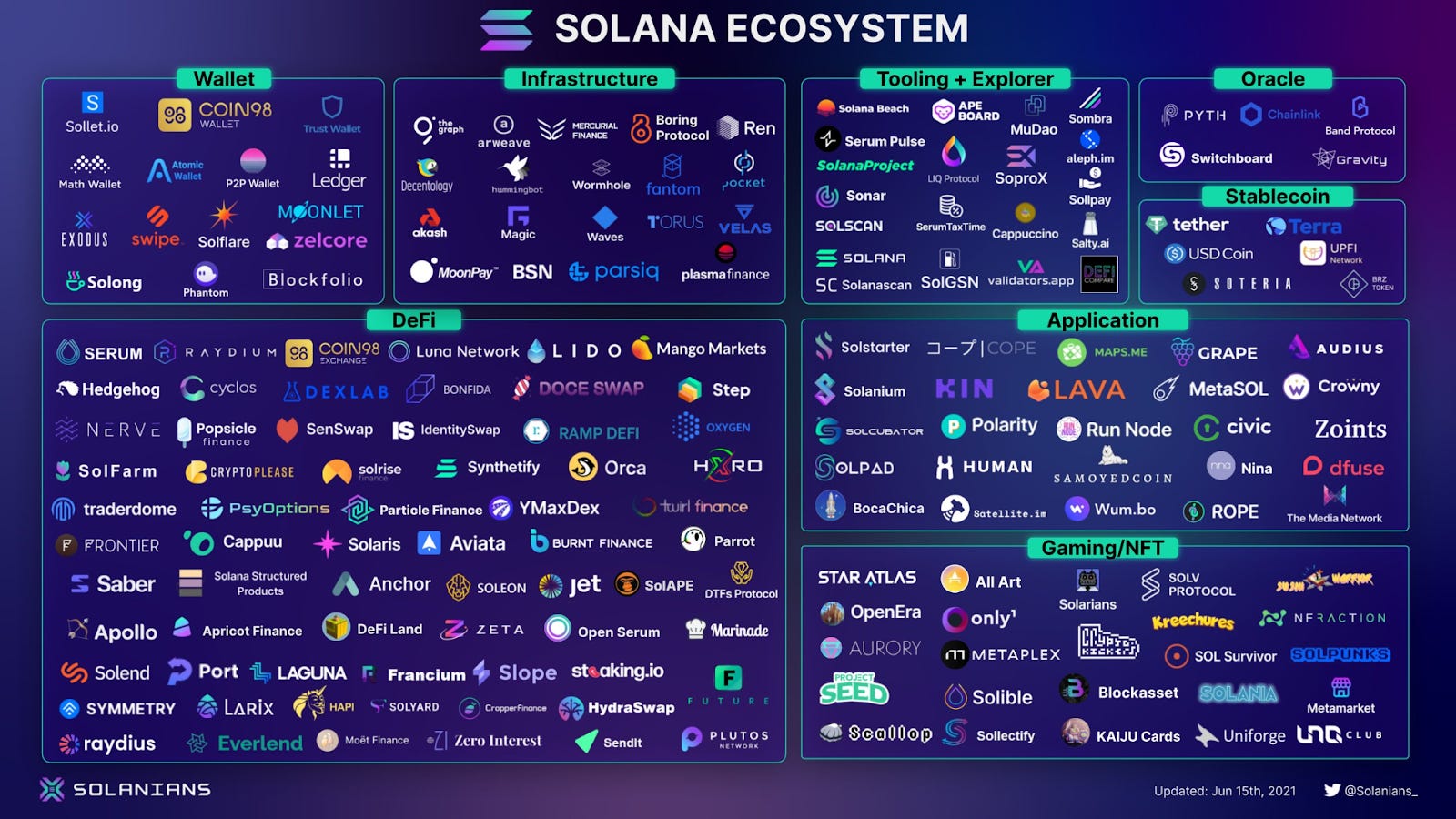
Comprehensive on-chain data analysis · Real-time market insights · Portfolio tracking tools
Gain a deeper understanding of the Solana market with advanced research tools that provide critical data for informed trading decisions.

AMD Ryzen 3 4300U processor · 16GB DDR4 RAM and 512GB SSD · 17.3-inch display with numeric keyboard
A capable laptop with sufficient processing power and memory to efficiently run trading platforms and research tools.

Explores the origins and development of Ethereum · Focuses on the community of crypto-hackers · Narrative on building the next internet
Understand the foundational principles and disruptive potential of blockchain technology through this insightful book on Ethereum's early days.
As an Amazon Associate I earn from qualifying purchases. Prices may vary.
No comments yet. Be the first to share your thoughts!