
Solana staking in 2026
Staking SOL secures the network while earning you a yield. Since the 2022 governance vote enabled inflation rewards, it has become the primary way for holders to maintain their share of the network. You aren't just holding an asset; you're providing the collateral necessary for validators to process transactions.
The Solana network relies on a system of validators to process transactions and secure the blockchain. By staking your SOL, you are essentially voting with your tokens to support specific validators. Those validators then share a portion of their rewards with you, the delegator. As we move into 2026, Solana staking continues to be a popular way to earn passive income on your holdings.
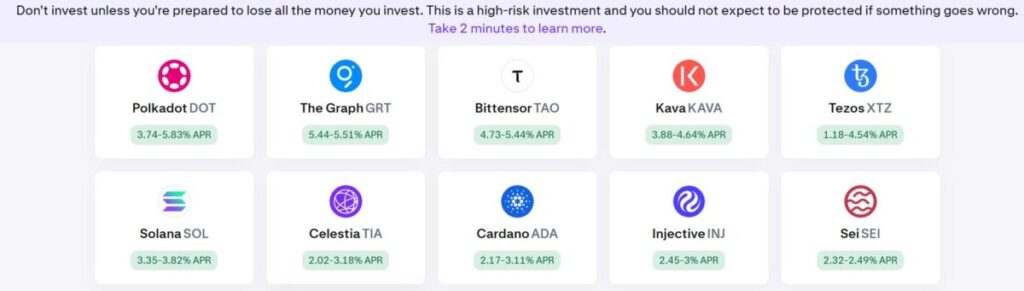
Predicting exact APY (Annual Percentage Yield) rates is difficult, as they are constantly changing based on network conditions. In late 2026, rates generally fluctuate between 6% and 12%, but can be higher or lower depending on the validator and overall network activity. It’s important to understand that these rates aren’t guaranteed, and you should always do your own research before delegating your SOL.
Maximizing returns in 2026 requires more than just picking the highest APY. You have to balance commission rates against validator performance and decide if auto-compounding fees make sense for your stack size.
How delegation works
At its core, Solana staking relies on a system of delegation. You, as a SOL holder, don't need to run a validator node yourself. Instead, you delegate your tokens to an existing validator. This allows you to participate in the network’s consensus mechanism without the technical overhead of running a node. Validators are responsible for processing transactions, creating new blocks, and maintaining the security of the Solana blockchain.
When a transaction occurs on Solana, validators compete to process it. The network selects validators based on the amount of SOL they have staked – the more stake a validator has, the higher their chances of being chosen. This is known as stake-weighted voting. Stakers, by delegating to validators, effectively participate in this voting process and influence the network’s governance.
There’s a significant difference between being a validator and delegating to one. Running a validator node requires substantial technical expertise, a reliable server infrastructure, and a significant amount of SOL as collateral. Validators also face the risk of slashing, which is a penalty for misbehavior or downtime. Delegating, on the other hand, is much simpler and carries less risk, though you are still subject to the validator’s performance.
The rewards for staking are generated through a combination of network inflation and transaction fees. New SOL is minted as inflation, and a portion of the transaction fees collected by validators is distributed to their delegators. The exact distribution of rewards depends on the validator’s commission rate and the amount of SOL they have staked. Understanding these mechanics is crucial for making informed staking decisions.
Validator performance and reputation
Choosing the right validator is a crucial step in maximizing your Solana staking rewards. While APY is important, it shouldn’t be the only factor you consider. Uptime, commission rates, slashing history, and community reputation are all vital components of a good validator. Here’s a look at some well-regarded Solana validators as of late 2026, presented for your consideration.
Marinade Finance: Known for its liquid staking derivative (LSD) offering, Marinade allows you to stake SOL and receive mSOL in return, which can be used in other DeFi protocols. They consistently maintain high uptime and have a strong reputation within the community. Commission rates are typically around 0.5-1.0%.
Jito Labs: Jito is another popular validator that offers liquid staking and actively contributes to the Solana ecosystem. They are known for their innovative features and commitment to network optimization. Commission rates are generally between 0.75% and 1.25%.
Figment: A well-established validator with a strong track record, Figment offers institutional-grade staking services and prioritizes security and reliability. They have a transparent and communicative approach to validator operations. Commission rates are typically around 1.0-1.5%.
Blockdaemon: Blockdaemon is a global infrastructure provider for blockchain networks, offering staking services for Solana and other protocols. They are known for their robust infrastructure and enterprise-level security. Commission rates are usually between 1.25% and 1.75%.
Laine: Laine consistently demonstrates high uptime and a commitment to network stability. They maintain an active presence on social media and are responsive to community inquiries. Commission rates are generally around 0.8-1.3%.
Solana Beach: This validator focuses on providing reliable staking services with a low commission rate. They prioritize transparency and open communication with their delegators. Commission rates are typically between 0.5% and 0.9%.
Staked: Staked offers both individual and institutional staking services, with a focus on security and compliance. They provide detailed performance reports and prioritize customer support. Commission rates are generally between 1.0% and 1.5%.
Everstake: Everstake is a well-known validator with a global presence, offering staking services for multiple blockchains. They are committed to providing secure and reliable staking services. Commission rates are typically between 0.75% and 1.25%.
Breaker Yield: Breaker Yield combines validator services with DeFi strategies to maximize returns for stakers. They are known for their innovative approach and active participation in the Solana ecosystem. Commission rates are generally between 1.25% and 1.75%.
P2P Validators: P2P Validators emphasizes community involvement and transparency in their operations. They offer competitive commission rates and prioritize network stability. Commission rates are generally between 0.6% and 1.1%.
Solana Validator Comparison - 2026 (Example Data)
| Validator Name | Uptime (%) | Commission Rate (%) | Total Stake (SOL) | Delegator Count | Slashing Events |
|---|---|---|---|---|---|
| Laine Staking | 99.95 | 8.0 | 1,250,000 | 350 | No |
| Blocksmith Labs | 99.98 | 7.5 | 980,000 | 280 | No |
| Everstake | 99.92 | 9.0 | 750,000 | 200 | No |
| Staking Foxes | 99.89 | 8.5 | 600,000 | 150 | Yes |
| Figment | 99.97 | 7.0 | 1,500,000 | 400 | No |
| Belltower | 99.90 | 10.0 | 400,000 | 100 | No |
Illustrative comparison based on the article research brief. Verify current pricing, limits, and product details in the official docs before relying on it.
APY rates and what drives them
As of late 2026, Solana staking APY rates typically range from 6% to 12%, but this is a dynamic number. Several factors influence these rates, and it’s important to understand them to manage your expectations. The total amount of SOL staked is a major factor – as more SOL is staked, the APY tends to decrease, and vice versa. Network activity also plays a role; higher transaction volume generally leads to higher rewards for validators.
The Solana inflation rate, which is determined through onchain governance, directly affects staking rewards. A higher inflation rate means more new SOL is being minted, increasing the overall reward pool. However, inflation also dilutes the value of existing SOL holdings. Validator commission rates are another key component. Validators charge a percentage of the rewards they earn to cover their operational costs, and this commission is deducted from your staking rewards.
It's critical to remember that APY is not guaranteed. It's a snapshot in time based on current conditions. Rates can change significantly due to fluctuations in network activity, inflation, and validator competition. To estimate your potential rewards, you can use a Solana staking calculator – several are available online, such as those provided by Solana Beach and Staking Rewards.
For example, if you stake 100 SOL at an APY of 8%, you can expect to earn approximately 8 SOL in rewards over the course of a year (before accounting for validator commissions). However, this is just an estimate, and the actual amount may vary. Always factor in the validator’s commission rate when calculating your potential returns.
Auto-compounding for higher returns
Auto-compounding is a strategy where your staking rewards are automatically reinvested to earn even more rewards. This can significantly boost your APY over time, thanks to the power of compounding interest. However, it’s not without its drawbacks, primarily the transaction fees associated with frequent re-staking.
Currently, there aren’t a huge number of dedicated auto-compounding services for Solana staking, but some platforms like Marinade Finance offer features that facilitate automatic re-staking of rewards. You can also write custom scripts to automate the process, but this requires advanced technical skills. The costs involved with auto-compounding – primarily transaction fees – need to be carefully considered.
Transaction fees on Solana can fluctuate depending on network congestion. If the fees are high, they can eat into your rewards, potentially negating the benefits of auto-compounding. It's essential to calculate whether the increased APY from compounding outweighs the cost of the transaction fees. For smaller stakes, the fees might be disproportionately high.
Ultimately, the decision of whether or not to use an auto-compounding strategy depends on your individual circumstances. If you have a large stake and are comfortable with the technical aspects, it can be a worthwhile option. However, for smaller stakes or those less familiar with Solana development, manual re-staking might be a more cost-effective approach.
Slashing and downtime risks
While Solana staking offers attractive rewards, it’s essential to be aware of the associated risks. One of the most significant risks is slashing, which occurs when a validator misbehaves or experiences technical issues that disrupt the network. If a validator is slashed, a portion of their staked SOL – and the SOL of their delegators – is forfeited.
Slashing can happen for various reasons, including double-signing blocks, submitting invalid transactions, or experiencing prolonged downtime. While reputable validators take steps to mitigate these risks, they can still occur. Choosing validators with a strong track record and a commitment to security is crucial to minimize your exposure to slashing.
Downtime is another risk to consider. If a validator goes offline, they won’t be able to process transactions or earn rewards. This can result in a loss of staking income. Validators with high uptime are generally preferred, as they demonstrate reliability and stability. It’s important to monitor your validator’s performance and be prepared to undelegate if they experience frequent downtime.
Finally, there’s the risk of smart contract bugs in any auto-compounding services you might use. If a bug is exploited, your funds could be at risk. Always thoroughly research any platform before entrusting them with your SOL. Diversifying your stake across multiple validators can also help mitigate risk.
Community Insights & Future Trends
The Solana community is actively discussing ways to improve the staking experience. Recent conversations on Reddit and Twitter center around reducing transaction fees for auto-compounding, increasing transparency among validators, and exploring new reward mechanisms. There’s a growing interest in liquid staking derivatives, which allow stakers to access their staked SOL while still earning rewards.
Many community members are excited about the potential for future integrations between Solana staking and other DeFi protocols. For example, some are exploring ways to use staked SOL as collateral for lending and borrowing platforms. Others are interested in creating more sophisticated auto-compounding strategies that optimize for both APY and transaction fees.
A common concern raised within the community is the potential for centralization among a small number of validators. Some are advocating for measures to encourage greater validator diversity and reduce the risk of systemic failure. There’s also ongoing debate about the optimal inflation rate for Solana, balancing the need to incentivize staking with the desire to maintain the value of SOL.
Looking ahead, it’s likely that Solana staking will continue to evolve and adapt to the changing needs of the ecosystem. We may see new features implemented, such as more granular control over staking preferences and improved tools for monitoring validator performance. The future of Solana staking is bright, but it's vital to stay informed and adapt to the latest developments.
No comments yet. Be the first to share your thoughts!