
Solana trading in 2026
Solana's trading scene in 2026 has moved past the chaotic growth of 2024. Most platforms now focus on capital efficiency and stopping MEV bots rather than just fighting for new users. We aren't just swapping tokens anymore; we're using tools that actually handle institutional-sized volume.
Early DEXs aimed to replicate the experience of centralized exchanges, but now, the best platforms are leveraging Solana’s speed and low cost to offer features simply not possible on Ethereum or other blockchains. This includes advanced order types, concentrated liquidity, and complex trading strategies. The biggest challenge remains bridging the gap between these powerful tools and ease of use for the average crypto user.
As of December 2026, the total value locked (TVL) across all Solana DEXs stands at approximately $8.5 billion, a 60% increase from the start of the year, according to Soladex.io. This growth isn't uniform; Jupiter dominates the landscape, but Raydium and Orca continue to carve out their niches. The competition is fierce, and innovation is constant. The current focus is on minimizing impermanent loss and maximizing returns for liquidity providers.
Jupiter: the aggregator king
Jupiter is, without a doubt, the leading Solana DEX as of late 2026. Its core strength lies in its aggregation capabilities. Jupiter doesn’t make markets; it finds them. It pulls liquidity from across multiple DEXs – Raydium, Orca, Liftoff, and others – to secure the best possible price for traders. This is a huge advantage, especially for larger trades where slippage can be a significant cost.
Jupiter’s v6 architecture, rolled out in early 2025, was a game-changer. It introduced a more modular design, allowing for faster integration of new liquidity sources and trading features. The biggest improvement was a revamped MEV (Miner Extractable Value) system. Jupiter now uses a sophisticated auction mechanism to distribute MEV rewards to both searchers and liquidity providers, reducing front-running and improving overall trading efficiency.
The JUP token plays a critical role in the Jupiter ecosystem. It’s used for governance, allowing holders to vote on protocol upgrades and new features. More importantly, it's integral to the MEV auction process, incentivizing participation and ensuring fair distribution of rewards. Holding JUP also grants users access to exclusive trading features and discounts. However, the token's price has seen volatility, influenced by overall market conditions and Jupiter’s adoption rate.
Using Jupiter is generally a smooth experience. The user interface is clean and intuitive, even for those new to DeFi. However, the advanced features can be overwhelming for beginners. One downside is the reliance on external DEXs; if a liquidity source experiences issues, it can impact Jupiter’s performance. Jupiter's success is dependent on the health of the broader Solana DEX ecosystem.
- Jupiter pulls liquidity from every major pool on Solana to find the lowest slippage.
- MEV Auction: Fairly distributes value to searchers and LPs.
- JUP Token: Governance and access to exclusive features.
- User-Friendly Interface: Relatively easy to use, even for beginners.
Solana DEX Comparison 2026: Jupiter, Raydium & Orca
| Liquidity Sources | MEV Protection | Token Utility | User Interface | Advanced Features |
|---|---|---|---|---|
| Jupiter | High 🚀 | Medium | High | High |
| Raydium | Medium | Medium | Medium | Medium |
| Orca | Medium | Low | High | Medium |
Illustrative comparison based on the article research brief. Verify current pricing, limits, and product details in the official docs before relying on it.
Essential Tools for Solana DEX Trading Success

Accessible crypto and NFT management · Secure hardware wallet · Compatible with Desktop and Android
Securely manage your assets and interact with Solana's top Decentralized Exchanges (DEXs) like Jupiter, Raydium, and Orca with this recommended hardware wallet.

100% offline cold storage · Air-gapped technology for enhanced security · Supports over 10,000 coins and tokens, including SOL and NFTs
Securely manage your assets and interact with Solana's top Decentralized Exchanges (DEXs) like Jupiter, Raydium, and Orca with this recommended hardware wallet.

Phantom Wallet themed apparel · Crypto and blockchain design · Comfortable t-shirt
Show your support for the Solana ecosystem and browser extensions like Phantom with this fun apparel.
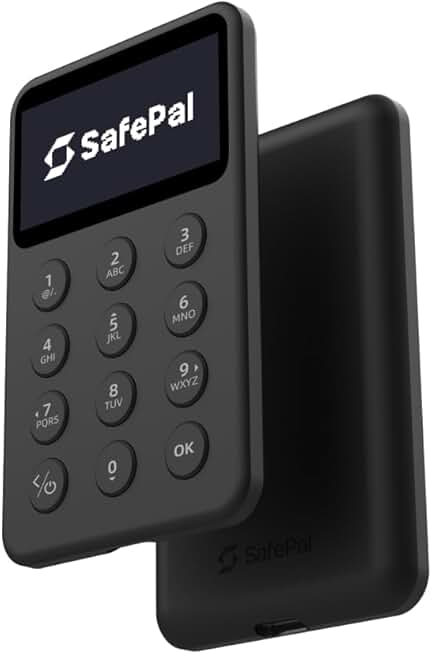
Open-sourced hardware wallet · Bluetooth connectivity · Cold storage for private keys and mnemonic phrases
Securely manage your assets and interact with Solana's top Decentralized Exchanges (DEXs) like Jupiter, Raydium, and Orca with this recommended hardware wallet.

Pack of two secure crypto wallets · 100% offline cold storage · Supports Bitcoin, Ethereum, NFTs, and more
Securely manage your assets and interact with Solana's top Decentralized Exchanges (DEXs) like Jupiter, Raydium, and Orca with these recommended hardware wallets.
As an Amazon Associate I earn from qualifying purchases. Prices may vary.
Raydium: Order Books and Innovation
Raydium distinguishes itself with its order book model, a rarity in the DeFi space, which is typically dominated by automated market makers (AMMs). This allows for more precise price discovery and the ability to place limit orders – a feature missing from many other Solana DEXs. However, order books require sufficient liquidity to function effectively, and Raydium’s liquidity can sometimes be fragmented.
Raydium’s historical connection to the Serum ecosystem remains relevant, though the relationship has evolved. While Serum itself has faced challenges, Raydium continues to leverage its core infrastructure for order book functionality. Raydium also offers a robust set of liquidity pools and farming opportunities, allowing users to earn rewards by providing liquidity. These opportunities carry the usual risks of impermanent loss.
The RAY token is used for staking, governance, and boosting rewards in liquidity pools. Staking RAY increases the rewards earned from providing liquidity and grants voting rights on protocol decisions. Providing liquidity on Raydium involves the risk of impermanent loss, so users should carefully consider the potential downsides before participating. The value of RAY is tied to the success of the Raydium platform and the overall Solana ecosystem.
Raydium has adapted to the changing Solana landscape by focusing on specialized trading pairs and integrating with new DeFi protocols. It’s become a popular choice for traders looking for more control over their orders and access to a wider range of trading strategies. The order book model remains a key differentiator, but Raydium needs to continually innovate to maintain its competitive edge.
Orca: Simplicity and Accessibility
Orca’s primary focus is on user experience. It’s designed to be the most accessible and easy-to-use DEX on Solana. Orca deliberately sacrifices some advanced features in favor of simplicity, making it an excellent choice for newcomers to DeFi. The interface is clean, intuitive, and guides users through the trading process step-by-step. It really is the 'easy button' for Solana trading.
Orca’s Whirlpools are a key innovation. These are concentrated liquidity pools that provide more efficient trading and reduce slippage. Unlike traditional AMMs, Whirlpools allow liquidity providers to focus their capital on specific price ranges, maximizing their returns. This is a significant advantage, especially for stablecoin pairs.
The ORCA token is used for governance and to earn a share of trading fees. Holding ORCA grants users voting rights on protocol upgrades and new features. It also provides a small percentage of the trading fees generated by the platform. Orca’s community is very active and plays a key role in shaping the platform’s development.
Compared to Jupiter and Raydium, Orca generally offers slightly higher slippage and fees, especially for larger trades. However, the difference is often negligible for smaller trades, and the added convenience and user-friendliness may outweigh the cost for many users. Orca’s commitment to simplicity and accessibility has earned it a loyal following.
- User-Friendly Interface: Extremely easy to use, even for beginners.
- Whirlpools let you provide liquidity in specific price ranges to earn more yield.
- ORCA Token: Governance and fee sharing.
- Strong Community: Active and engaged user base.
Fees, Slippage, and Trading Volume
Comparing fees and slippage across these three DEXs is complex, as it depends heavily on the trading pair, liquidity, and network congestion. Generally, Jupiter offers the lowest slippage due to its aggregation capabilities. Orca tends to have the highest slippage, particularly for less liquid pairs. Raydium falls somewhere in between, with slippage varying depending on the order book depth.
Typical trading fees are relatively low across all three platforms, generally around 0.2% to 0.3%. However, network congestion can significantly increase fees, especially during periods of high demand. As of December 2026, average Solana transaction costs are around $0.002, but can spike to $0.01 or higher during peak times.
Looking at trading volume, Jupiter consistently leads the pack, processing over $150 million in daily volume. Raydium handles around $75 million, while Orca sees approximately $50 million. However, these numbers fluctuate, and specific trading pairs may see higher volume on different platforms. For example, certain meme coins might be more actively traded on Orca due to its user base.
To illustrate, a $10,000 trade of USDC to SOL might cost $2.50 in fees and experience 0.1% slippage on Jupiter, resulting in a final price of $9,975. On Orca, the same trade might cost $3 in fees and experience 0.3% slippage, resulting in a final price of $9,940. These differences may seem small, but they can add up over time.
Security Considerations
Security is paramount when trading on any DEX. All three platforms – Jupiter, Raydium, and Orca – have undergone smart contract audits by reputable firms, but audits are not foolproof. Past exploits on Solana DEXs highlight the risks involved. It’s crucial to remember that DeFi is still a relatively new and evolving space.
As of late 2026, there have been no major security breaches reported on Jupiter or Orca. Raydium experienced a minor incident in 2024 involving a compromised liquidity pool, resulting in a small loss of funds for some users. Each DEX has implemented security measures such as multi-signature wallets and bug bounty programs to mitigate risks.
To stay safe, always use a hardware wallet like a Ledger or Trezor to store your private keys. Be extremely cautious of phishing scams and never click on suspicious links. Double-check the contract addresses before approving any transactions. Consider using a limit order to avoid unexpected price fluctuations. Diversify your holdings across multiple DEXs to reduce your exposure to any single platform.
Smart contracts are never 100% safe. These platforms have audits, but code can still fail. Stick to hardware wallets and verify every contract address before you sign anything.
No comments yet. Be the first to share your thoughts!