
Solana DeFi Platforms: Budget Fit
Finding a Solana DeFi platform that balances cost with performance means looking at transaction fees, slippage, and the hidden costs of liquidity fragmentation. Solana’s high throughput keeps per-transaction costs near zero, but yield strategies often involve multiple hops across decentralized exchanges (DEXs) and lending protocols. These hops introduce slippage and impermanent loss risks that can erode returns faster than gas fees ever could.
When evaluating budget fit, prioritize platforms that aggregate liquidity to minimize slippage. Jupiter, for instance, acts as a DEX aggregator, routing trades through multiple pools to find the best price. This reduces the cost of entry and exit for your positions. Similarly, lending platforms like Kamino Finance allow you to supply assets across multiple protocols simultaneously, optimizing yield without needing to manually shift capital between apps.
However, low fees are not the only budget consideration. The age and condition of a protocol’s smart contracts matter. Newer platforms may offer higher APYs to attract liquidity, but they carry higher smart contract risk. Established protocols like Raydium or Orca have undergone extensive audits and have larger treasuries, providing a buffer against exploits. For budget-conscious users, the tradeoff is clear: accept slightly lower yields on mature platforms for significantly lower risk of total loss.
Always verify the total value locked (TVL) as a proxy for trust and liquidity depth. A platform with $1 billion in TVL, like Jupiter or Raydium, has more capital backing its operations than a newer entrant with $10 million. This depth ensures you can enter and exit positions without moving the market against yourself.
Shortlist real options
Solana hosts some of the most active decentralized finance (DeFi) protocols in the market, offering everything from automated market makers to lending markets. Choosing the right platform depends on whether you prioritize deep liquidity, yield generation, or seamless token swaps. The following comparison highlights five leading Solana DeFi platforms based on total value locked (TVL), trading volume, and core functionality.
| Platform | Primary Type | TVL / Volume | Best For |
|---|---|---|---|
| Jupiter | DEX Aggregator | $2.36B Combined | Best overall swaps and limit orders |
| Kamino Finance | Lending & Borrowing | $1.48B TVL | Leveraged yield and lending |
| Raydium | Automated Market Maker | $1.00B TVL | Spot trading and liquidity pools |
| Jito | Liquid Staking | $877M TVL | MEV-boosted staking rewards |
| Sanctum | Liquid Staking | $1.30B Combined | Restaking and diverse LSTs |
Jupiter acts as the primary gateway for Solana trading. By aggregating liquidity from multiple decentralized exchanges, it ensures users get the best possible prices with minimal slippage. Its "Super App" interface also supports limit orders and recurring buys, making it the go-to tool for most traders.
For those looking to put idle assets to work, Kamino Finance offers a sophisticated lending and borrowing platform. It allows users to earn yield on deposits or take out leveraged positions against their collateral. It is particularly popular for strategies that involve borrowing stablecoins against staked SOL.
Raydium remains a cornerstone for spot trading and providing liquidity. As an automated market maker (AMM), it facilitates direct token swaps and offers high-yield farming opportunities for liquidity providers. It is essential for traders who want direct access to specific token pairs.
Jito and Sanctum dominate the liquid staking sector. Jito combines staking with MEV (Maximum Extractable Value) rewards, offering higher yields than standard staking. Sanctum provides a broader range of liquid staking tokens (LSTs), allowing users to restake their assets across various protocols for enhanced capital efficiency.
Inspect the expensive parts
2026 guide: Top Solana DeFi Platforms, Wallets & Trading Bots for Maximum Yield works best as a clear sequence: define the constraint, compare the realistic options, test the tradeoff, and choose the path with the fewest hidden costs. That order keeps the advice usable instead of decorative. After each step, pause long enough to check whether the recommendation still fits the reader's actual situation. If it depends on perfect timing, unusual access, or a best-case budget, include a simpler fallback.

Plan for ownership costs
The headline fee on Solana is often fractions of a cent, but that is only the transaction cost. The real ownership costs of Solana DeFi come from hidden frictions: slippage, impermanent loss, and the time required to manage positions. A platform that charges zero fees can still cost you money if the exit liquidity is thin or the strategy requires constant rebalancing.
Hidden frictions in trading
When you trade on a Decentralized Exchange (DEX) like Raydium or Jupiter, the price you see is rarely the price you get. Slippage occurs when your trade size moves the market price, especially in smaller pools. If you are not careful with your slippage tolerance settings, you might pay significantly more than expected. Additionally, network congestion can lead to failed transactions, which still incur base fees. Always check the estimated price impact before confirming a swap.
The cost of providing liquidity
Providing liquidity to earn yield is not passive income; it is an active position that requires management. In Automated Market Maker (AMM) pools, you are exposed to impermanent loss. This happens when the price of your deposited assets diverges from the price when you entered. If one asset pumps while the other stagnates, you end up with more of the losing asset and less of the winning one compared to simply holding. In volatile markets like Solana, this drag can easily outpace the trading fees you earn.
Maintenance as a cost
Some DeFi platforms require you to actively manage your positions to maintain yield. For example, lending protocols may require you to add collateral if the value of your deposited assets drops relative to your borrowings. Failing to monitor these ratios can lead to liquidation, where your assets are sold off at a discount. Even if you never touch the platform, smart contract risks exist. While Solana has improved stability, bugs in newer protocols can lead to total loss of funds. Diversifying across established protocols with higher TVL reduces this risk but often lowers potential yields.


As an Amazon Associate, we may earn from qualifying purchases.
Solana DeFi FAQs
Which DeFi platform is the best on Solana?
There is no single "best" platform because Solana hosts specialized protocols for different needs. For lending and borrowing, Kamino Finance leads with over $1.48B in total value locked (TVL). Jupiter is the top choice for trading, acting as a liquidity aggregator that finds the best rates across all decentralized exchanges. If you want liquid staking, Jito is the dominant protocol, allowing you to earn staking rewards while keeping your capital active.
Is Solana a DeFi platform?
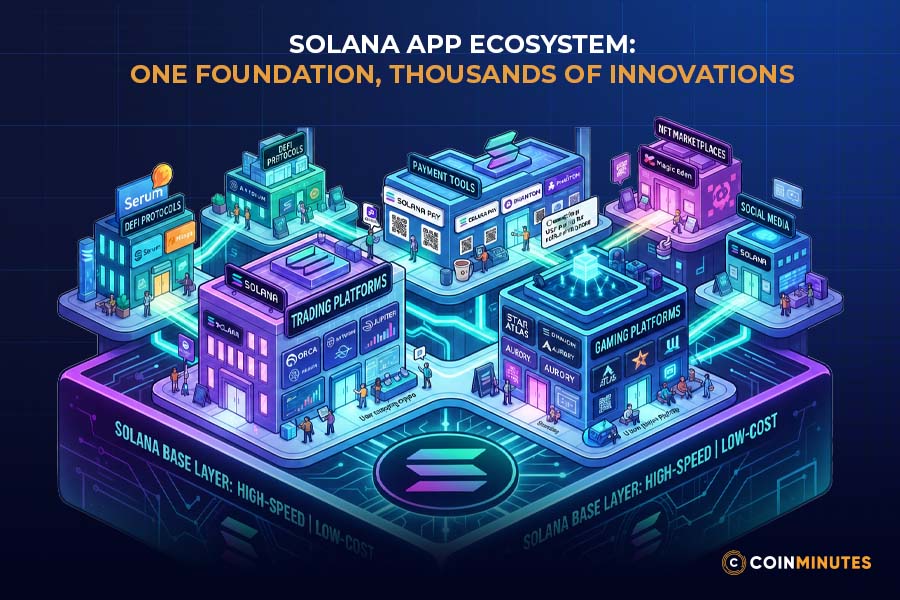
Solana is a high-performance blockchain, not a single DeFi application. It serves as the infrastructure layer where decentralized finance applications are built. These applications—such as Raydium for trading or MarginFi for lending—operate on top of Solana’s network, leveraging its high throughput and low fees to offer financial services without traditional intermediaries.
What are the top 5 DeFi apps?
The most prominent Solana DeFi apps by usage and TVL include Jupiter (aggregator), Raydium (DEX), Kamino Finance (lending), Jito (liquid staking), and MarginFi (lending). These five cover the core DeFi activities: swapping tokens, providing liquidity, borrowing against assets, and earning yield on staked SOL. Other notable mentions include Sanctum for liquid staking infrastructure and Drift for derivatives trading.
Which Solana DeFi wallet is best?
Phantom is the most widely used Solana wallet due to its user-friendly interface and broad compatibility with DeFi apps. For users prioritizing security and hardware integration, Solflare is a strong alternative, offering advanced features like transaction simulation and multi-signature support. Both wallets are non-custodial, meaning you retain full control of your private keys, which is essential for interacting with DeFi protocols safely.
No comments yet. Be the first to share your thoughts!