
How Solana staking works
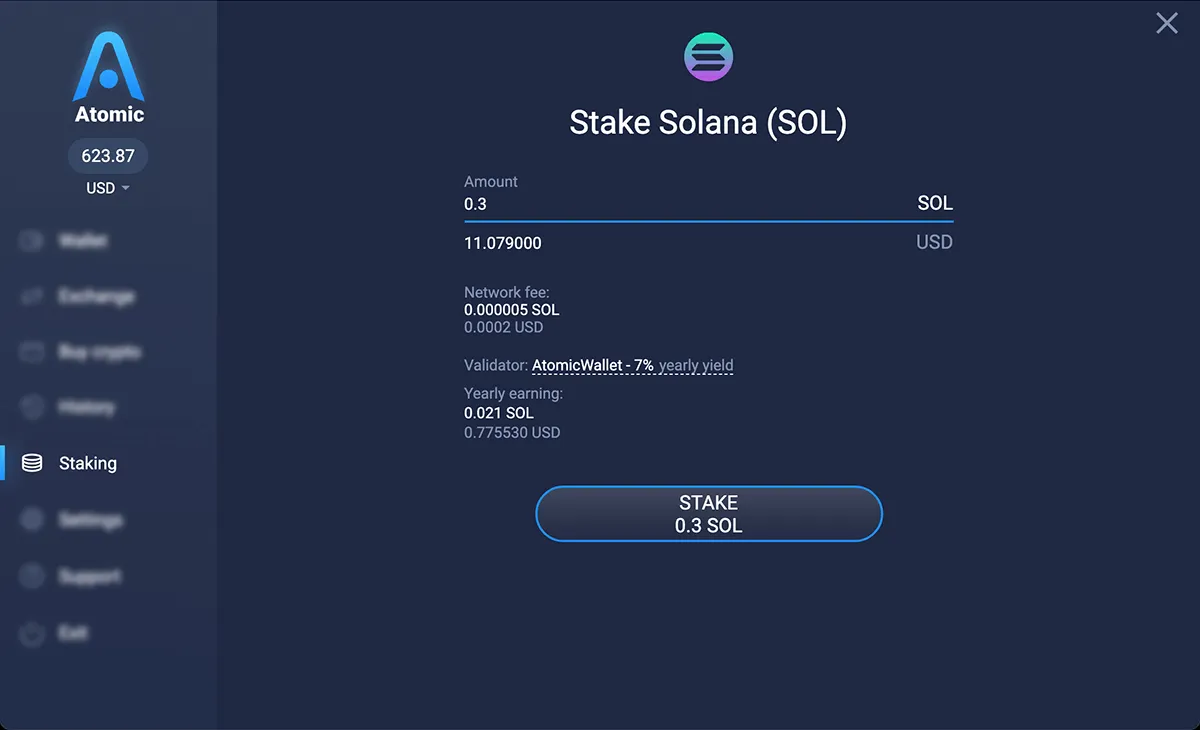
Solana staking is the process of holding and locking up your SOL tokens to help secure the Solana network. Think of it like putting your SOL to work. By participating, you’re contributing to the network’s overall health and functionality. In return, the network rewards you with more SOL.
This process is key to Solana's operation. Solana uses a Proof-of-Stake consensus mechanism, meaning it relies on staked SOL to validate transactions and maintain the blockchain. The more SOL is staked, the more secure and efficient the network becomes. It’s a win-win situation: you earn rewards, and Solana becomes more robust.
You can either delegate your SOL or run your own validator. Delegating involves entrusting your SOL to an existing validator, while running your own requires significant technical expertise and a substantial SOL holding. Most people choose delegation as it’s far simpler. It's really about choosing the level of involvement you want.
Where the rewards come from
Solana staking rewards come from two primary sources: inflation and transaction fees. Inflation is the issuance of new SOL tokens, a portion of which is distributed to stakers as a reward for securing the network. Transaction fees are the fees paid by users when interacting with the Solana blockchain, and a portion of these are also shared with stakers.
As of late 2024 and early 2025, the Solana network's annual staking reward rate has fluctuated, generally falling between 6% and 8%. You can find current estimates on the official Solana website (solana.com). It’s important to remember this is an estimated Annual Percentage Yield (APY).
The amount of rewards you receive isn’t fixed. Network activity plays a big role. Higher transaction volumes mean more fees to distribute, potentially increasing rewards. However, rewards are never guaranteed. They're subject to change based on network conditions and governance decisions. It's a dynamic system.
Picking a validator
Validators are the backbone of the Solana staking system. They are responsible for validating transactions, creating new blocks, and maintaining the network’s security. When you stake your SOL, you’re essentially assigning your voting power to a validator.
Choosing the right validator is important. Several factors come into play. Commission rates are what the validator charges for their services—lower isn't always better, as it can indicate a less reliable operation. Uptime matters because you need a validator that stays online to earn rewards. Total stake indicates how much SOL is already entrusted to the validator.
Reputation matters too. Resources like Solana Beach () provide detailed information about validators, including their performance metrics and historical data. Be cautious of validators with very low total stake or a history of downtime. Staking with a less reputable validator carries the risk of penalties.
- Commission rates are the percentage of rewards the validator keeps for themselves.
- Uptime shows how often the validator is actually online and working.
- Total Stake: The amount of SOL currently staked with the validator.
- Reputation: The validator’s history and community feedback.
Popular Solana Validators (as of Late 2023/Early 2024)
| Validator Name | Commission Rate | Uptime (%) | Total Stake (Approximate) | Description/Focus |
|---|---|---|---|---|
| Blockdaemon | 9.5% | 99.9% | Over 100 Million SOL | Institutional-grade validator, focusing on secure and reliable infrastructure. |
| Figment | 9.0% | 99.8% | Over 80 Million SOL | Offers staking services for institutions and individuals, with a focus on data analytics and API access. |
| Staking Facilities | 8.0% | 99.95% | Over 60 Million SOL | Dedicated to providing secure and high-performance Solana staking with a focus on validator key management. |
| Chorus One (now Figment) | 9.0% | 99.7% | Over 50 Million SOL | Focuses on supporting the broader Solana ecosystem and providing educational resources. (Note: Chorus One was acquired by Figment). |
| Everstake | 7.5% | 99.85% | Over 40 Million SOL | Community-focused validator with a strong presence in multiple blockchain networks. |
| Dapplooker | 8.5% | 99.9% | Over 30 Million SOL | Provides validator services alongside Solana blockchain explorers and analytics tools. |
Illustrative comparison based on the article research brief. Verify current pricing, limits, and product details in the official docs before relying on it.
Estimating your returns
Let's get practical. A Solana staking rewards calculator helps you estimate your potential earnings. These calculators take into account several variables. The amount of SOL you stake is the most obvious. The validator’s commission rate reduces your overall reward. The current network reward rate (as a percentage) is a key factor, and the duration of your stake impacts the total amount earned.
Here’s a simplified example: If you stake 100 SOL with a validator charging a 10% commission, and the network reward rate is 7% APY, your estimated annual return would be 6.3 SOL (7% of 100 SOL minus 10% commission on the 7 SOL). Remember, this is an estimate. Actual rewards can vary.
It’s vital to understand that any calculator provides projections, not guarantees. Network conditions and reward rates can change unexpectedly. Treat these calculations as a tool for planning, not a promise of specific returns. Use the Solana staking rewards calculator to play with different scenarios and understand how each variable impacts your potential earnings.
Risks to consider
Staking isn’t without risks. One of the most significant is slashing. This happens when a validator acts maliciously or fails to meet performance standards. If your staked SOL is with a slashed validator, you could lose a portion of your stake. Validator downtime, even if not malicious, can also result in reduced rewards.
The price volatility of SOL itself is another crucial consideration. Even if you earn SOL rewards, the value of those rewards can fluctuate significantly depending on market conditions. A sudden price drop could offset your staking gains. It’s important to be prepared for potential price swings.
Finally, be aware of unstaking periods. When you want to withdraw your staked SOL, there’s typically a delay (currently around 3-5 days). This is to ensure network stability. There may also be small fees associated with unstaking. Mitigating these risks involves careful validator selection and understanding the inherent volatility of cryptocurrency.
Wallets and platforms
You have several options for staking your SOL. Staking through a wallet like Phantom or Solflare gives you complete control of your private keys – this is known as non-custodial staking. It’s considered more secure, but requires you to manage your own security. These wallets generally offer a user-friendly interface for delegating to validators.
Alternatively, you can stake SOL through centralized exchanges like Coinbase or Binance, if they offer staking services. This is custodial staking, meaning the exchange holds your private keys. It's generally easier to use, but you’re trusting the exchange with your funds. Exchange staking often comes with higher fees and less control.
The best method depends on your priorities. If security and control are paramount, a non-custodial wallet is the way to go. If convenience is more important, an exchange might be a better fit. Consider the fees, security features, and overall reputation of each platform before making a decision.
The outlook for 2026
Predicting the future is always tricky, but we can look at current trends to anticipate what might happen with Solana staking in 2026. The network is constantly evolving, and future upgrades could potentially impact reward rates. I’m not sure about exact numbers, but it's reasonable to expect continued adjustments to the staking mechanism.
The validator landscape is also likely to change. We might see consolidation among validators, with larger, more reputable validators gaining a greater share of the stake. The competition for stakers will likely intensify, potentially leading to lower commission rates. Increased SOL adoption could also affect reward distribution.
Overall, Solana staking is likely to remain a core part of the network's operation. As the Solana ecosystem grows, the demand for staking services will probably increase. It’s a dynamic space, so staying informed about network updates and validator performance is essential.
No comments yet. Be the first to share your thoughts!